


Starbucks: Why It Works — and How Its Experience Can Become a Game
Starbucks is one of the most recognizable consumer brands in the world. Founded in Seattle in 1971, it has grown from a single coffee retailer into a global chain that shapes how millions of people start their day. More than coffee, Starbucks represents consistency, comfort, and a carefully designed customer experience.
That experience—especially how people browse menus and place orders—also makes Starbucks an interesting foundation for a simple, skill-based game.
What Starbucks Is
At its core, Starbucks is a coffeehouse chain offering hot and cold drinks, food, and seasonal products. Its success comes from combining:
- Predictable quality across locations
- A wide but structured menu
- Strong brand identity
- Digital tools like mobile ordering and rewards
The company doesn’t compete only on taste. It competes on experience design.
Why People Like Starbucks
People return to Starbucks for a few clear reasons.
First, consistency. Customers know what they’ll get, regardless of city or country.
Second, personalization. Drinks can be customized in detail, which makes ordering feel personal rather than transactional.
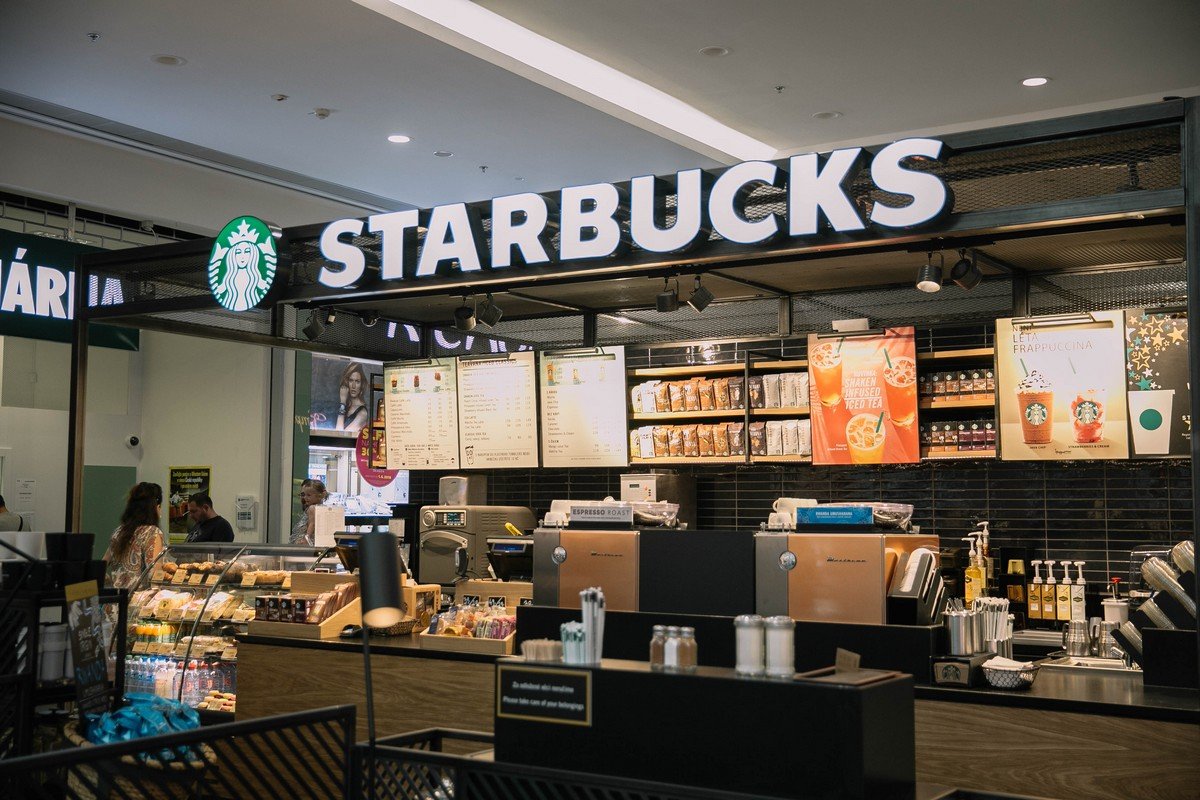
Third, environment. Starbucks positions itself as a “third place” between home and work, designed for short visits or long stays.
Over time, this turns a simple purchase into a habit.
Turning the Starbucks Experience Into a Game
The Starbucks menu and ordering flow can be reimagined as a lightweight interactive game focused on speed and accuracy.
Game Concept
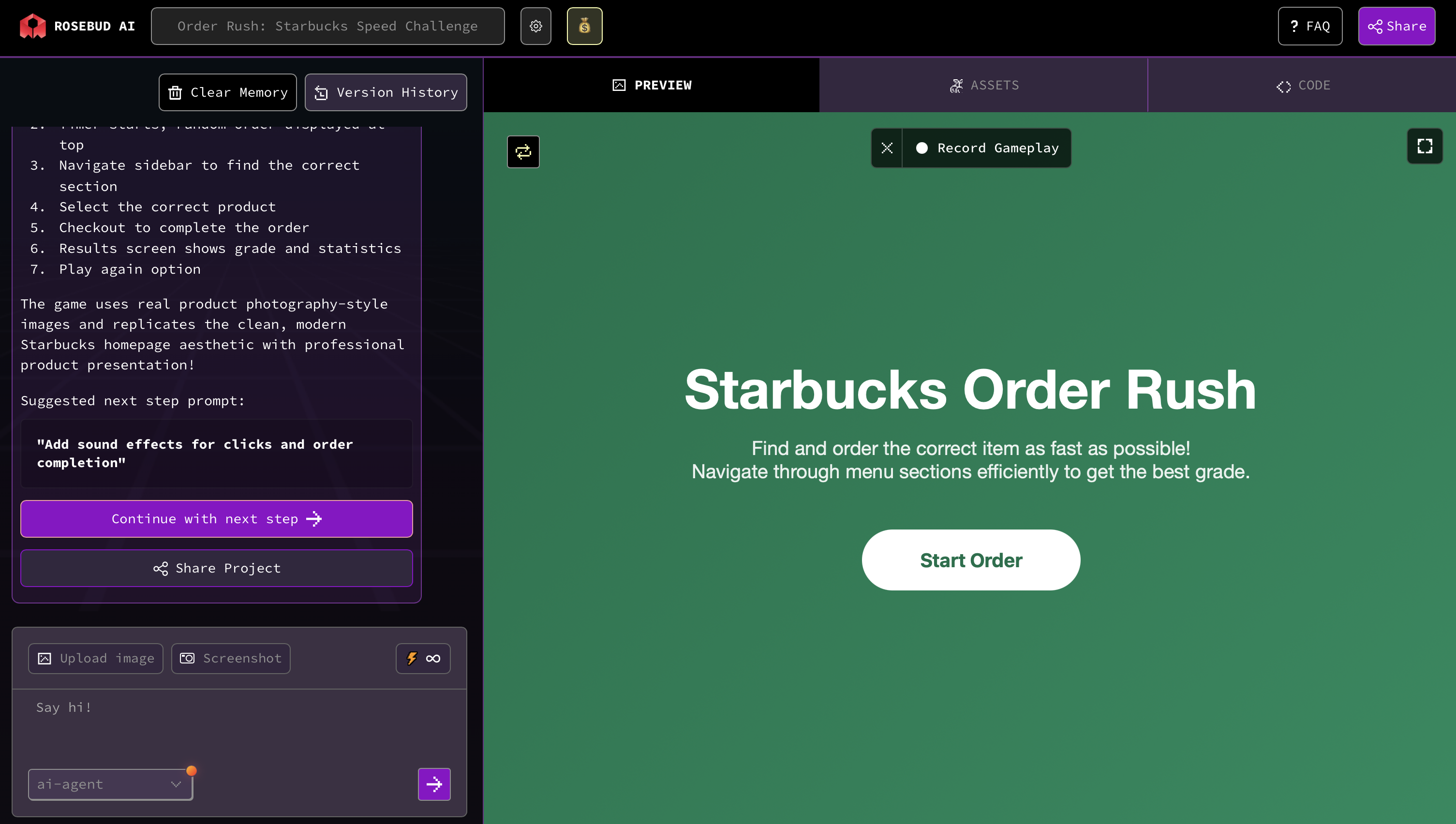
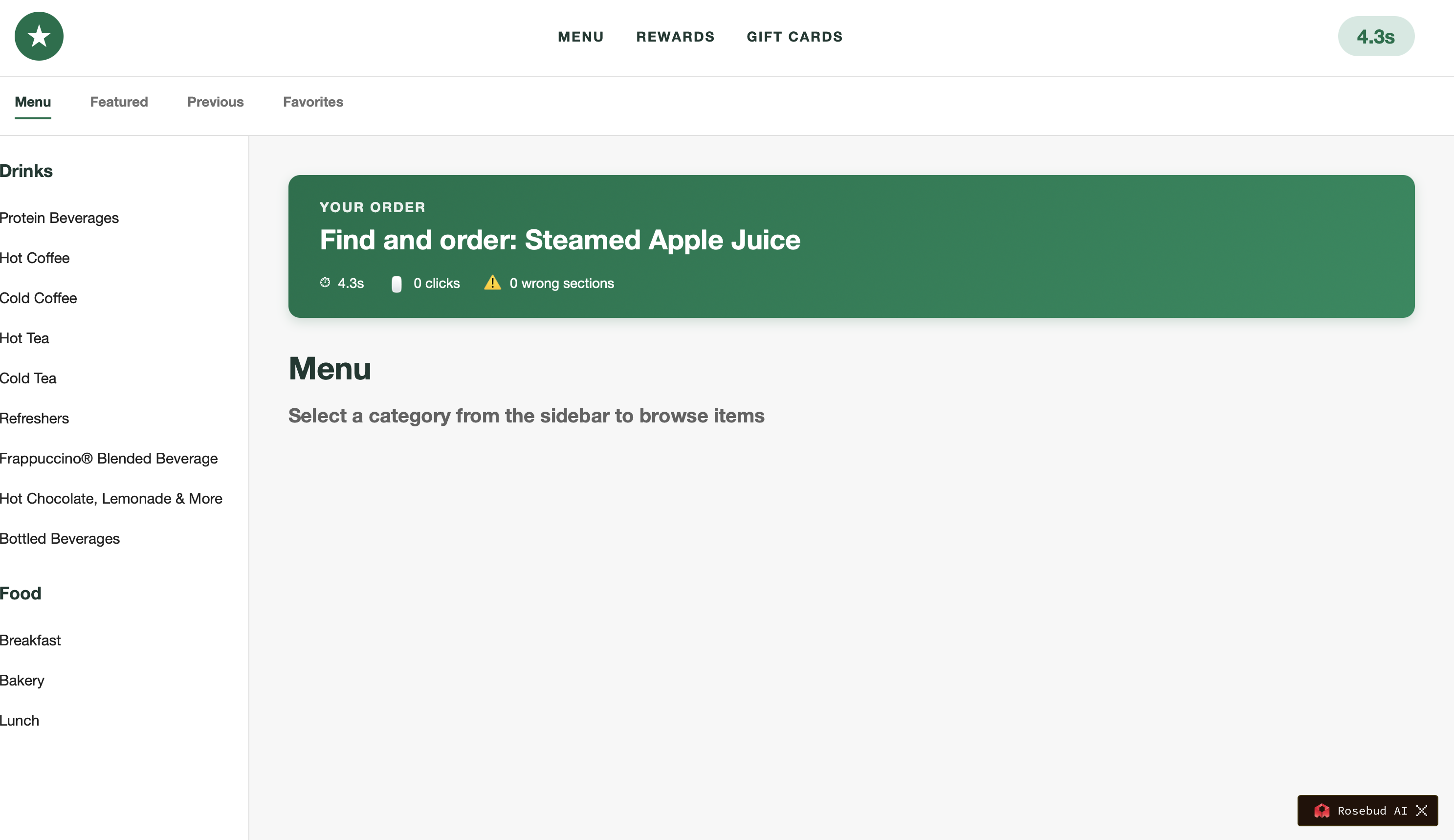
The player is presented with a homepage inspired by Starbucks. Their goal is to find and order a specific product as quickly as possible by navigating through up to 20 menu sections.
Each attempt measures how efficiently the player understands the menu structure. You can try my version here.
How the Game Works
- The player receives a random order (for example, a specific coffee or food item).
- They navigate through menu categories to find it.
- A timer runs from the start until the order is completed.
- Wrong sections add small penalties.
This mirrors real-world behavior: scanning menus, making decisions, and ordering under mild time pressure.
Efficiency & Speed Grading
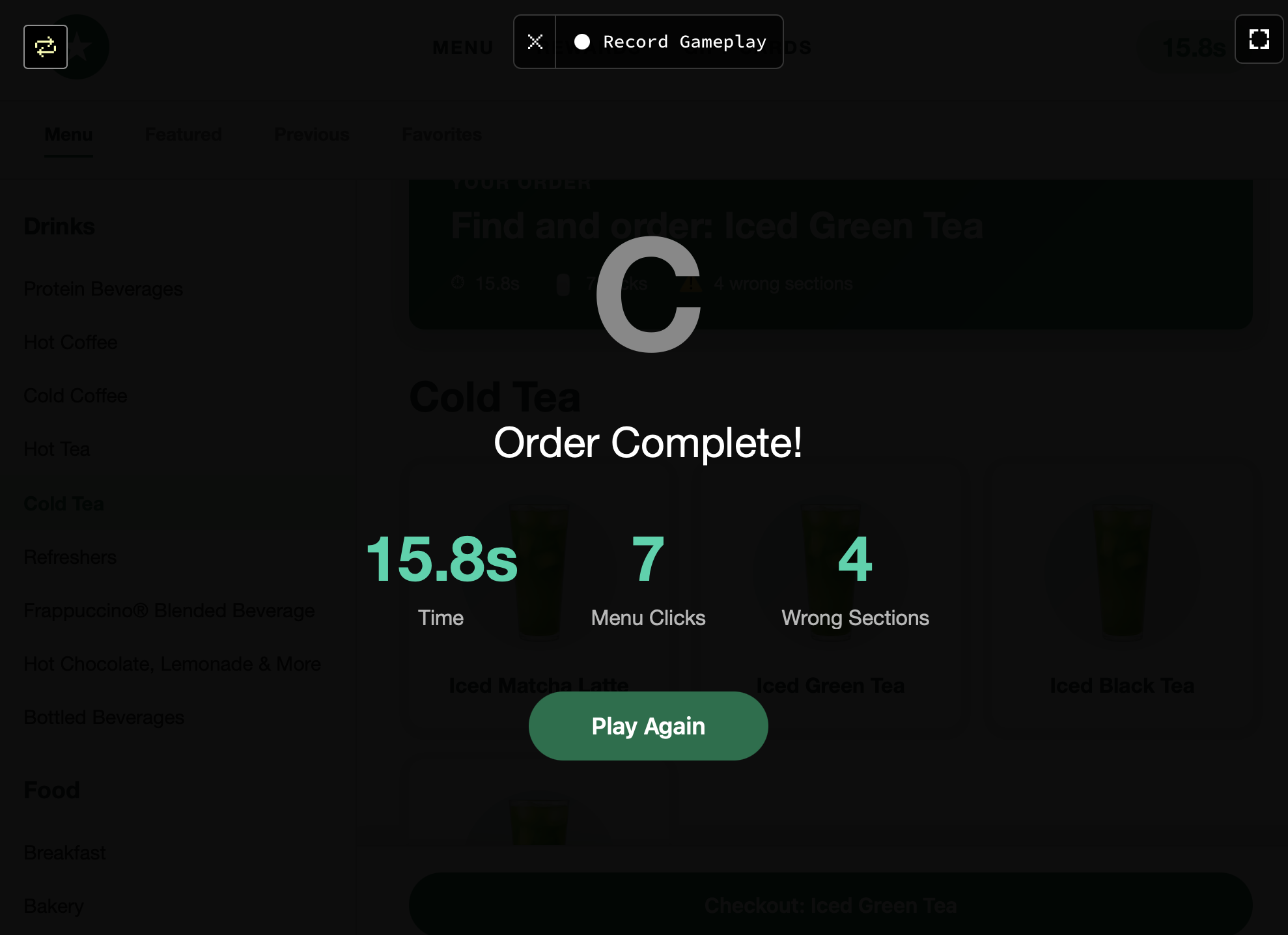
Each run is graded using simple metrics:
- Speed: total time to complete the order
- Navigation efficiency: number of unnecessary sections visited
- Order accuracy: correct item and options
The result is a clear performance grade (such as S, A, B, or C) with a short breakdown showing where the player was fast or slow.
Creating the Game With Rosebud AI
Using Rosebud AI, this game can be created without writing code.
- Start a new project from the Rosebud homepage.
- Describe a Starbucks-style homepage with menu categories and an order flow.
- Define the rules in natural language: timing, penalties, and scoring.
- Add a results screen showing speed and efficiency grades.
Rosebud handles the logic, UI flow, and replayability automatically.
Why This Approach Works
This type of game is:
- Familiar and easy to understand
- Based on real user behavior
- Short and replayable
- Suitable for web or mobile
It shows how everyday digital experiences—like ordering coffee—can be turned into simple, engaging interactive systems.
Conclusion
Starbucks succeeds because of thoughtful experience design, not just coffee. By turning its menu and ordering flow into a game, that same design can be explored in a playful, measurable way.
With tools like Rosebud AI, transforming real-world interfaces into interactive games becomes accessible—opening new ways to learn, test, and play with everyday digital habits.

Patrick Moumiet
Patrick is a marketer at Rosebud with a background as a content creator and social media strategist. He has launched courses and coaching programs in social media marketing and content creation, coaching 500+ large-scale influencers customers. On the Rosebud blog, he writes about consumer AI and how to make money with AI, exploring ways to combine state-of-the-art models with Rosebud’s creative tools.