


Part 1 — How Students Should Think About School and Career Choices
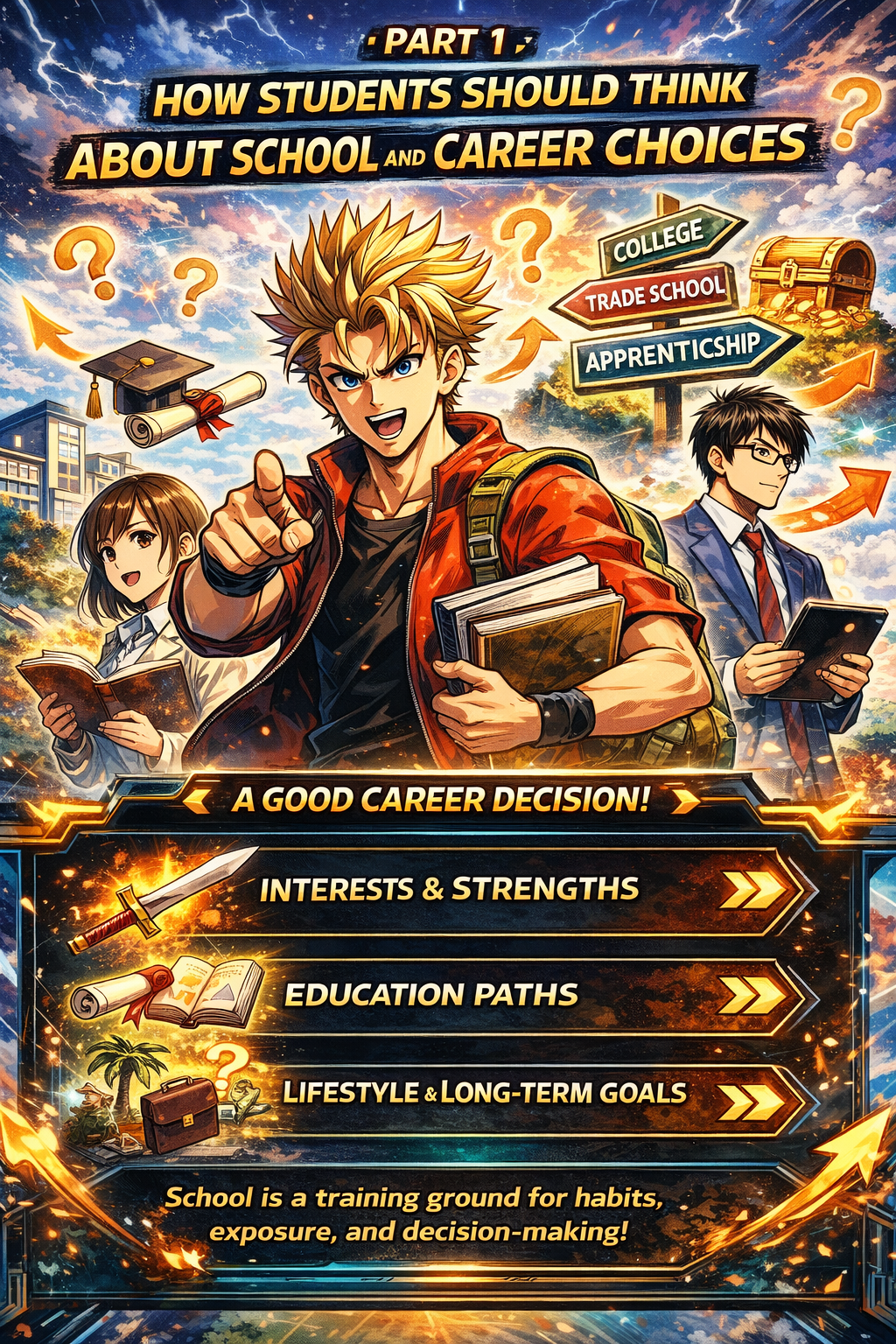
Choosing a school or career path is one of the earliest high-impact decisions students face. The problem is not lack of options—it’s lack of clarity. Many students choose based on pressure, vague ideas, or incomplete information rather than structured thinking.
A good career decision starts by understanding three core elements:
- Personal interests and natural strengths
- Realistic education paths and constraints
- Long-term lifestyle and work preferences
School is not just about grades. It is a training ground for habits, exposure, and decision-making.
How to Choose the Right School
The “best” school is not universal. It depends on what the student wants to become and how they learn best.
Key factors students should evaluate:
- Academic focus (theory-heavy vs practical)
- Access to internships, labs, or real projects
- Networking opportunities and alumni outcomes
- Learning style compatibility (structured vs flexible)
Choosing a school should feel like choosing a launch platform, not a label.
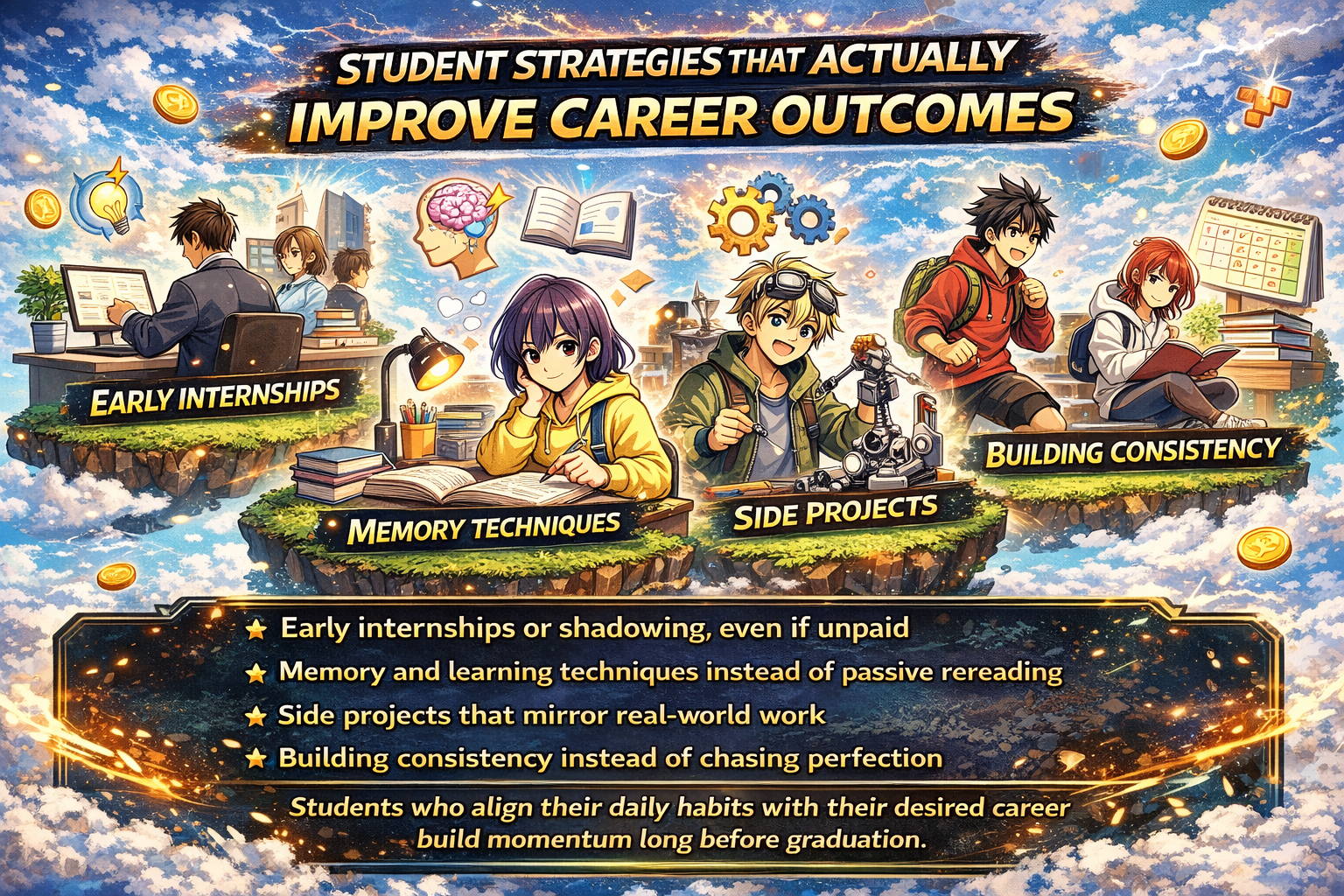
Student Strategies That Actually Improve Career Outcomes
Career success rarely comes from school choice alone. It comes from student behavior over time.
High-impact student strategies include:
- Early internships or shadowing, even if unpaid
- Memory and learning techniques instead of passive rereading
- Side projects that mirror real-world work
- Building consistency instead of chasing perfection
Why Traditional Career Advice Often Fails
Most career advice is static:
- Articles to read
- Lists of jobs
- Generic “follow your passion” guidance
But students don’t need more information—they need feedback loops. They need to see how a career choice connects to:
- Specific schools
- Concrete actions
- Daily behaviors
That’s where interactive tools—and games—become powerful.
Part 2 — Turn Career Advice Into a Game with Rosebud AI
Instead of reading career advice, students can play through it.
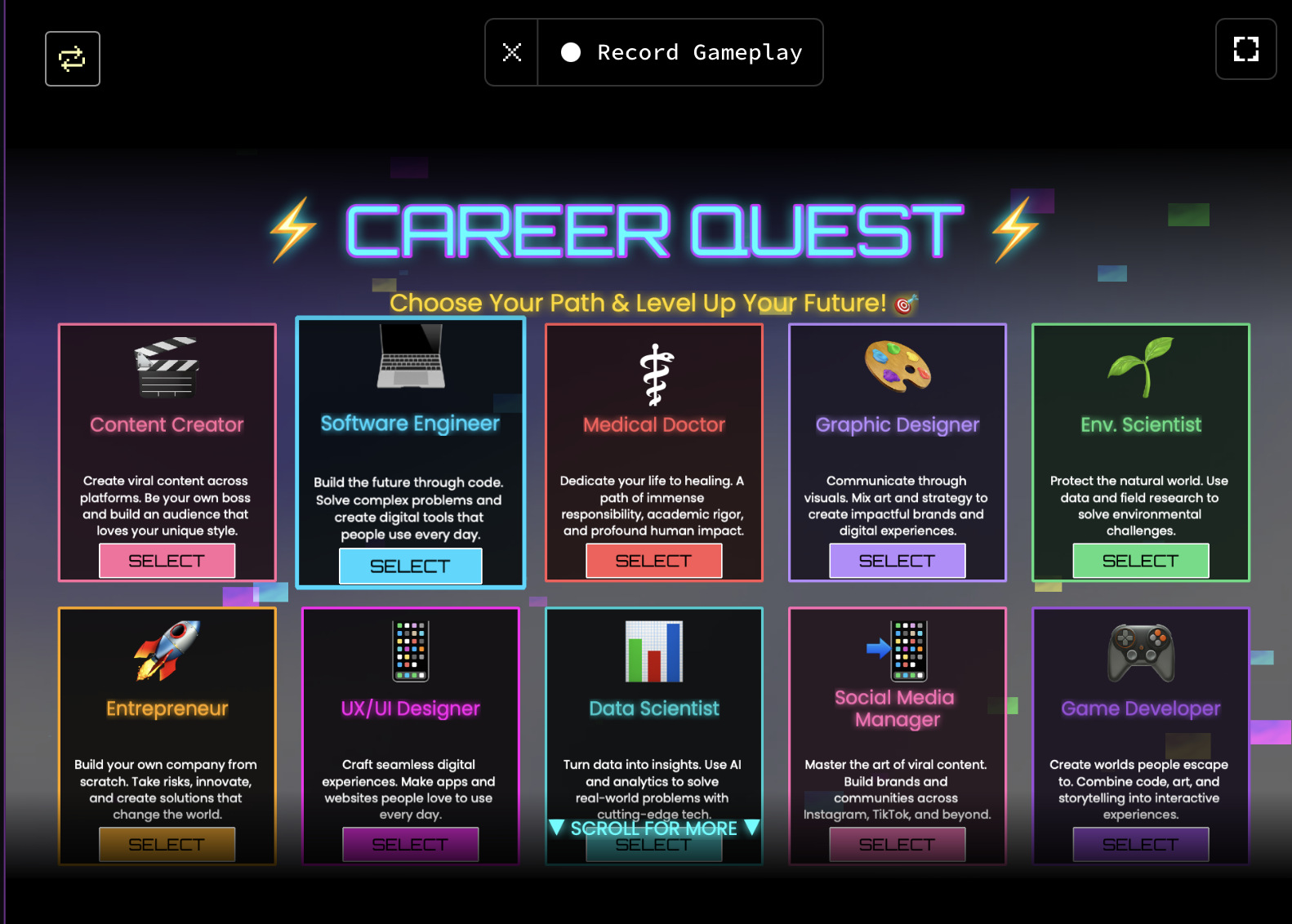
Using Rosebud AI, you can create a School & Career Selector Game App where students choose a career and instantly see the paths and strategies that support it.
You can try my implementation here : https://rosebud.ai/p/c4cc99d8-8cc2-416c-8ee5-af7c5163180c
The Core Game Flow
- Player selects a career goal
Examples: software engineer, designer, doctor, entrepreneur, researcher - The game generates recommended schools or education paths
Universities, vocational tracks, certifications, or hybrid options - The game suggests student strategies
- Internship timing
- Study methods (memory techniques, spaced repetition)
- Extracurricular focus
- Skill priorities
- The player sees trade-offs and consequences
Different choices unlock or limit future options, making the experience realistic and engaging.
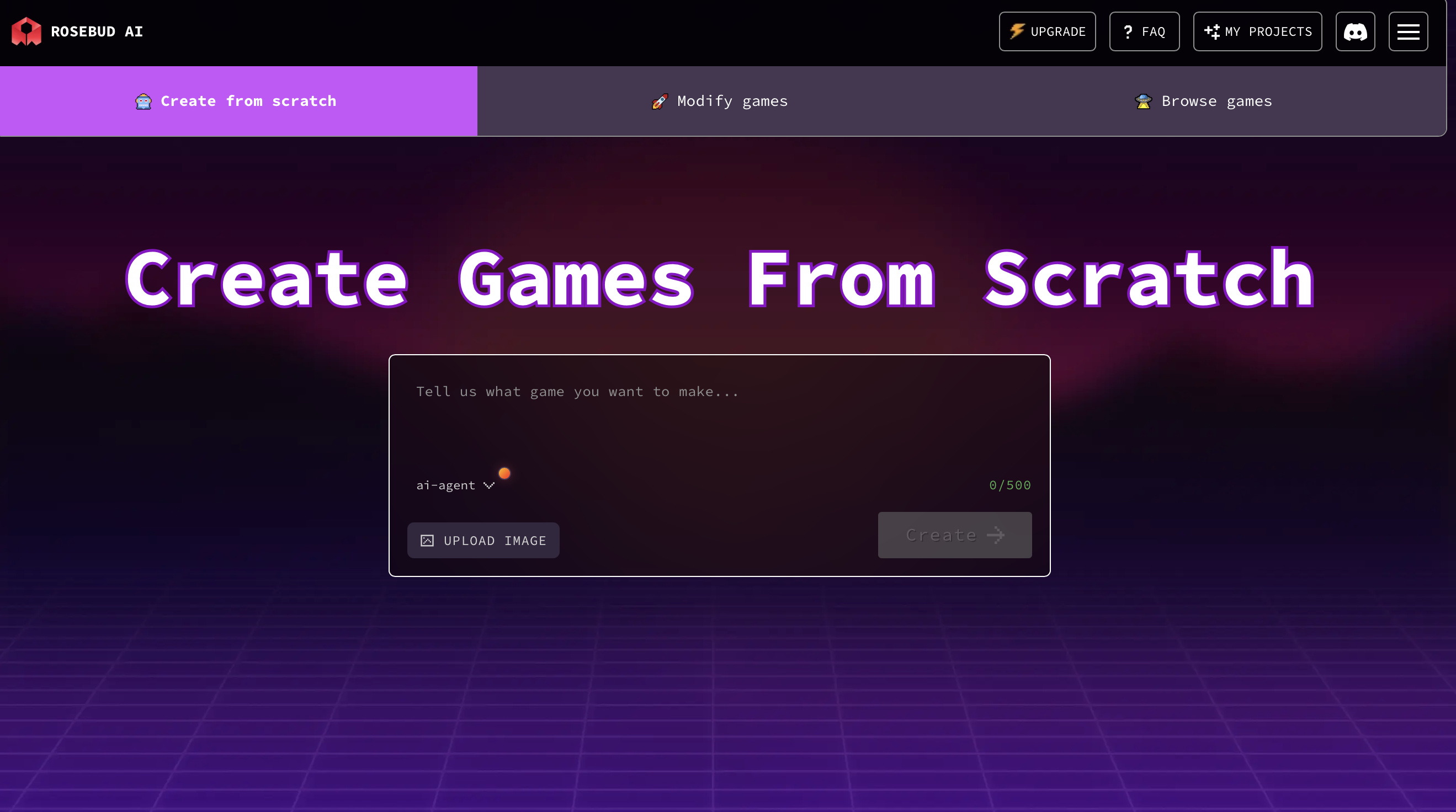
Step 1 — Use a Career Selector Prompt
Below is a starter prompt you can paste into Rosebud AI to generate the game logic.
Prompt Example (Career Selector Game):
Create an interactive career selection game for students. The player chooses a target career. Based on that choice, generate recommended school paths, study strategies, internships, and daily habits that increase success in that career. Present outcomes as guidance, not absolutes. Show trade-offs between different choices. The tone should be supportive, realistic, and educational. The experience should feel like planning a future through decisions, not taking a test.
Step 2 — Iterate and Personalize
You can expand the game by:
- Adding regions or countries
- Adjusting difficulty or realism
- Including time-based progression (year 1, year 2, graduation)
Why This Works for Students
A game-based career selector:
- Makes abstract advice concrete
- Encourages exploration without pressure
- Helps students understand cause-and-effect
- Turns planning into an engaging experience
Instead of asking “What should I become?”, students start asking “What actions today move me closer?”
Final Thought
Career decisions shouldn’t feel final or overwhelming. With the right guidance—and the right tools—students can explore paths safely, strategically, and confidently.
By combining thoughtful career advice with interactive game design, platforms like Rosebud AI allow educators, creators, and students themselves to turn uncertainty into clarity—and curiosity into action.

Patrick Moumiet
Patrick is a marketer at Rosebud with a background as a content creator and social media strategist. He has launched courses and coaching programs in social media marketing and content creation, coaching 500+ large-scale influencers customers. On the Rosebud blog, he writes about consumer AI and how to make money with AI, exploring ways to combine state-of-the-art models with Rosebud’s creative tools.