


New Year’s Eve Reset: How 2025 Changed Game Creation — and Why 2026 Belongs to Creators
2025 marked a real inflection point for the video game industry.
Not because games suddenly became bigger — but because they became more expressive, more personal, and more creator-driven than ever before. The year proved that great games no longer require massive teams alone; they require strong ideas, good tools, and communities willing to play, remix, and share.
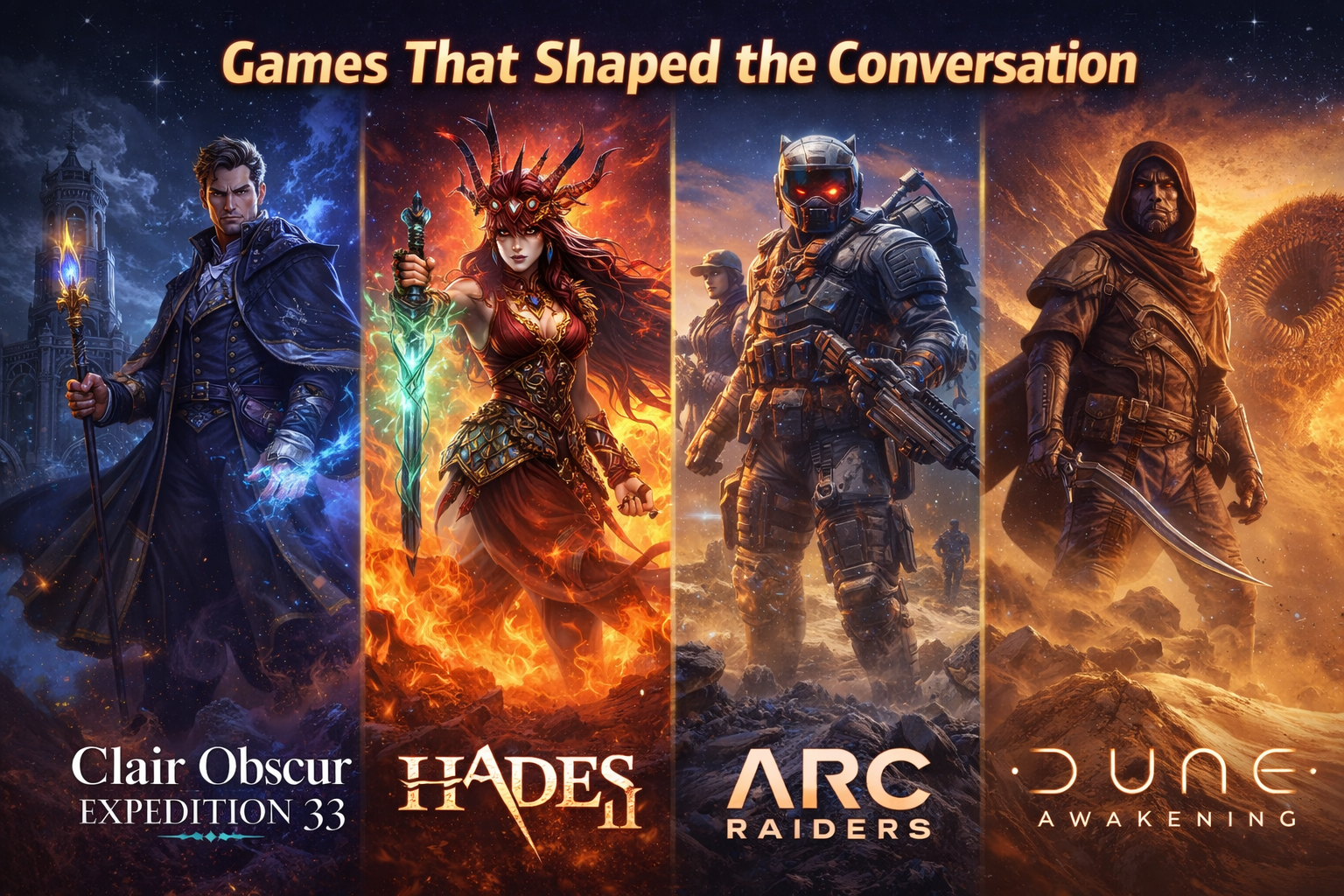
🎮 Games That Shaped the Conversation
Several titles dominated discussion throughout the year, highlighting very different directions the medium is taking:
- Clair Obscur: Expedition 33 emerged as one of the most talked-about releases of the year, praised for its painterly art direction, narrative ambition, and confident blending of classic RPG mechanics with modern presentation. Its success became a reference point for what small, focused teams can achieve.
- Hades II reinforced how early access and community-driven iteration can coexist with premium design, pushing action-driven storytelling forward.
- ARC Raiders showed how large-scale multiplayer experiences can still feel readable, tactical, and streamer-friendly — helping define the next phase of PvPvE games.
- Anticipation around long-awaited titles like Hollow Knight: Silksong demonstrated that patience, craftsmanship, and strong artistic identity still matter deeply to players.
- Meanwhile, live-service and survival titles such as Dune: Awakening highlighted the industry’s continued interest in persistent worlds and shared narratives.
Across these releases, a clear pattern emerged: players increasingly value distinct tone, emotional clarity, and replayable meaning over sheer scale.
🏆 Awards as a Signal, Not a Finish Line
The Game Awards in 2025 reflected this shift clearly.
Indie and mid-sized productions stood alongside traditional AAA titles, not as curiosities, but as category leaders — particularly in narrative design, art direction, and innovation. Rather than rewarding only technical spectacle, awards increasingly recognized intentional design, strong authorship, and emotional resonance.
In many ways, the awards mirrored what players were already signaling all year: games that say something travel further.
🛠️ The Tools That Changed How Games Are Made
Just as important as the games themselves were the tools behind them.
Unreal Engine
Epic Games’s Unreal Engine continued to dominate high-fidelity production in 2025, especially for visually ambitious titles. Its lighting systems, cinematic workflows, and large-world tooling enabled smaller teams to reach production quality once reserved for blockbuster studios.
Unity
Unity Technologies remained the backbone of indie development, powering everything from experimental narrative games to mobile and cross-platform releases. Unity’s accessibility and rapid iteration kept it central to creator-led innovation.
AI-Assisted Creation Enters a New Phase
More importantly, 2025 marked the year AI moved from assistive to collaborative.
Instead of just generating assets, AI systems began helping creators:
- Structure game logic
- Prototype mechanics instantly
- Design branching narratives
- Iterate faster without technical bottlenecks
🌱 Rosebud AI and the Rise of Agent-Driven Creation
This shift was especially visible within Rosebud AI.
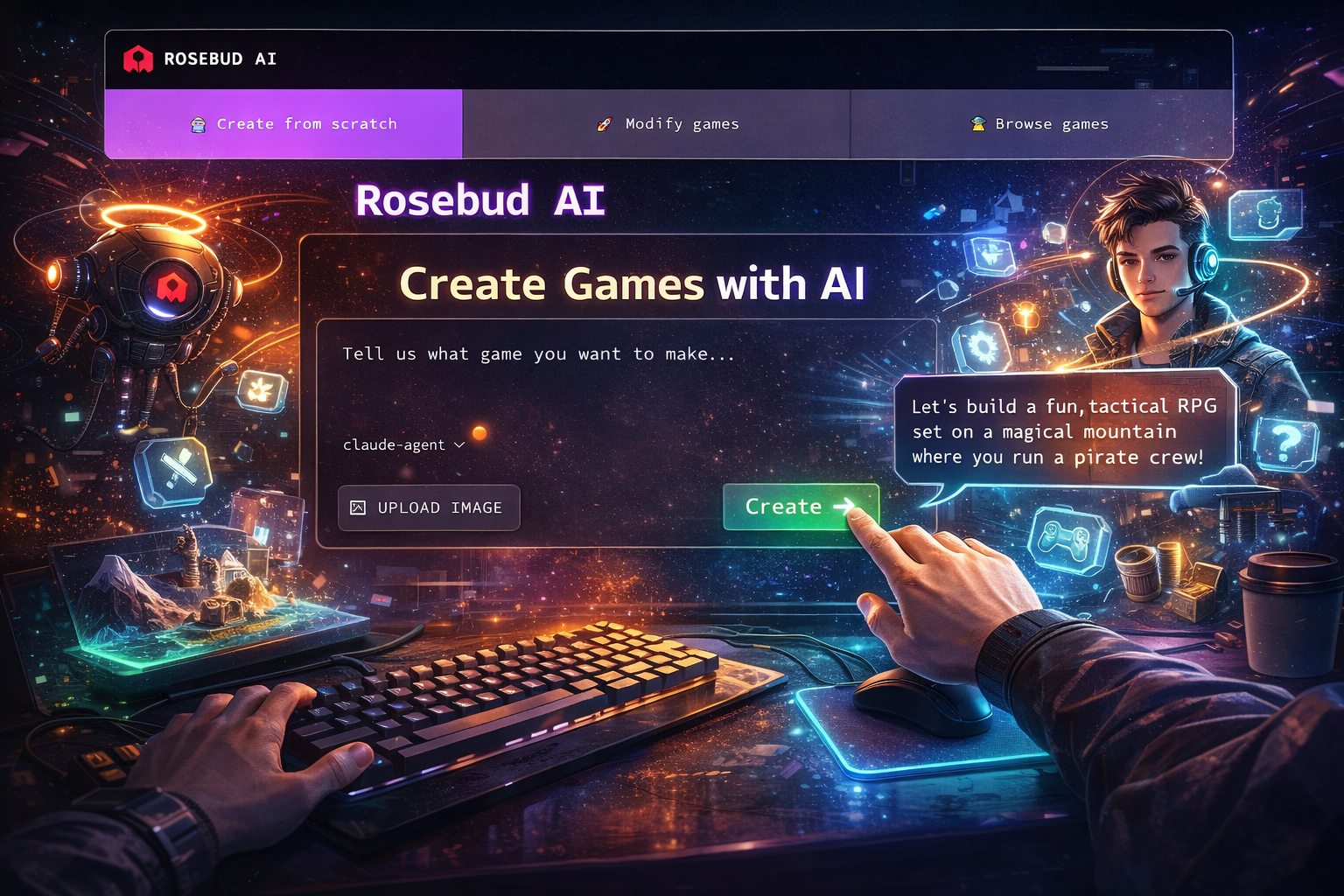
Throughout 2025, Rosebud evolved from a powerful creation tool into a true agent-driven platform. Smarter agents, more reliable outputs, and deeper narrative understanding allowed creators to build playable experiences that previously required full development teams.
Creators didn’t just make prototypes — they shipped real games:
- Chat-driven stories
- Short RPGs
- Personality-based experiences
- Experimental social games
Hundreds of thousand of games were created this year on Rosebud alone, reinforcing a simple truth:
The future of games belongs to creators who can move from idea to playable experience without friction.
Closing 2025, Building 2026 — Together
As the clock turns and a new year begins, one thing is clear: game creation is no longer limited by code.
In 2025, creators proved that ideas matter more than engines, and intention matters more than technical barriers. The most exciting games weren’t always the biggest — they were the ones that felt personal, reactive, and alive.
That shift is exactly why Rosebud AI exists.
Rosebud isn’t just another tool layered on top of traditional development. It’s a new way to create games — one where you describe what you want to make, and intelligent agents help turn that idea into a playable experience. No boilerplate. No complex setup. No coding required.
Creators use Rosebud AI game maker to:
- Build narrative games, RPGs, and chat-driven experiences
- Prototype mechanics instantly and iterate in real time
- Focus on story, design, and player emotion — not syntax
By integrating smarter agents and more reliable generation throughout 2025, Rosebud has become the most accessible way to create real games on the web. What once took teams and months can now begin with a single prompt.
And in 2026, that momentum only accelerates.
Rosebud will continue to evolve alongside its creators — becoming more expressive, more collaborative, and more powerful, while staying simple at its core. The goal isn’t to replace creativity, but to remove friction so more people can participate.
As one year ends and another begins, the future of games looks clearer than ever:
The best games of 2026 won’t be defined by who can code but by who has something to say and the desire to share their ideas and emotions.
Happy New Year from all of us at Rosebud AI ✨

Patrick Moumiet
Patrick is a marketer at Rosebud with a background as a content creator and social media strategist. He has launched courses and coaching programs in social media marketing and content creation, coaching 500+ large-scale influencers customers. On the Rosebud blog, he writes about consumer AI and how to make money with AI, exploring ways to combine state-of-the-art models with Rosebud’s creative tools.