


Damian has spent 25 years making games: starting as a 3D artist and working his way up to lead and art director on titles at studios including Relic Entertainment and Capcom, plus stints in mobile and VR. He even helped bring Doom 3 to VR. So when he says a tool impressed him, it carries weight.
"This is what I've been waiting for. I couldn't do it without Rosebud, to be honest with you."
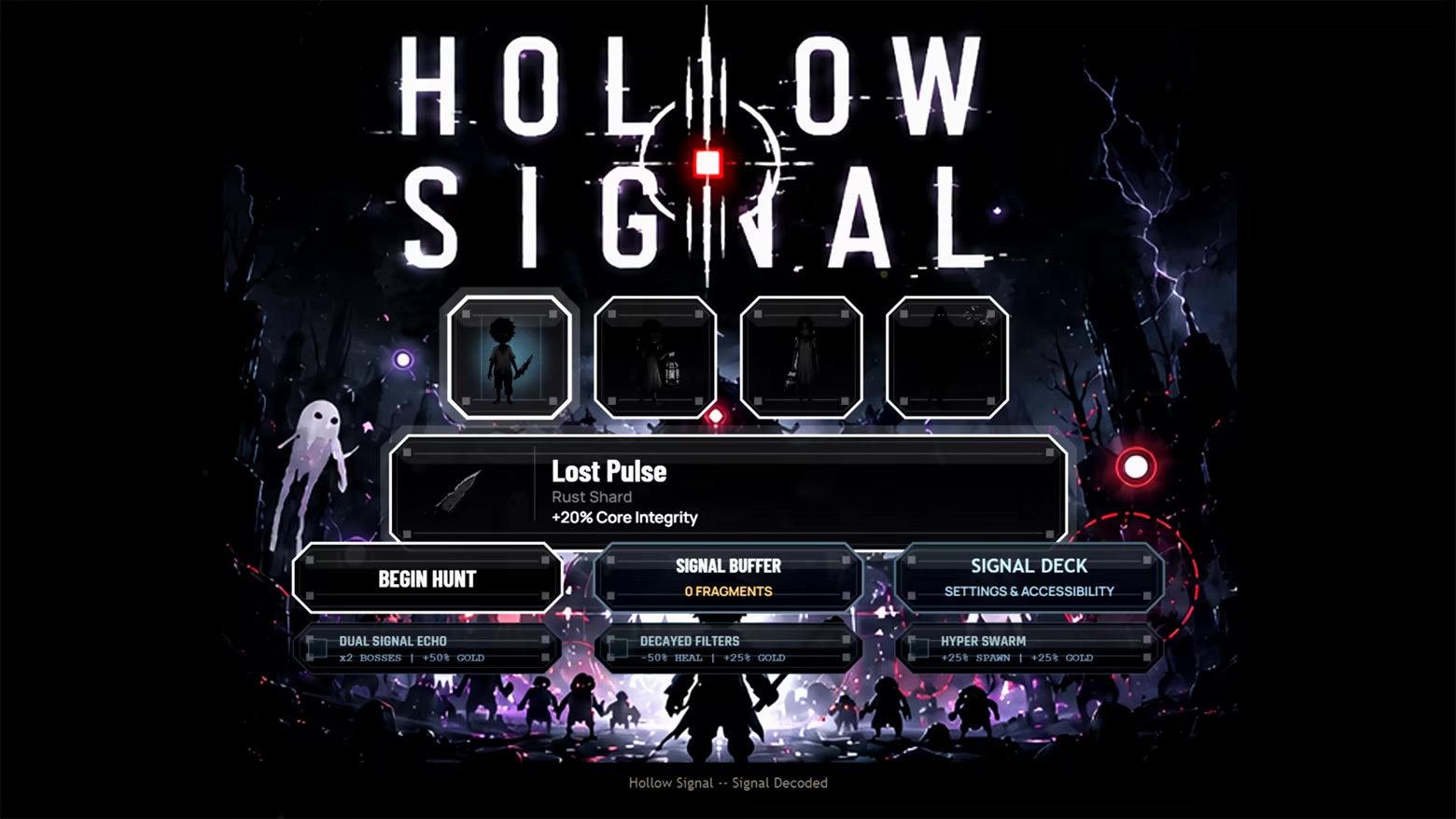
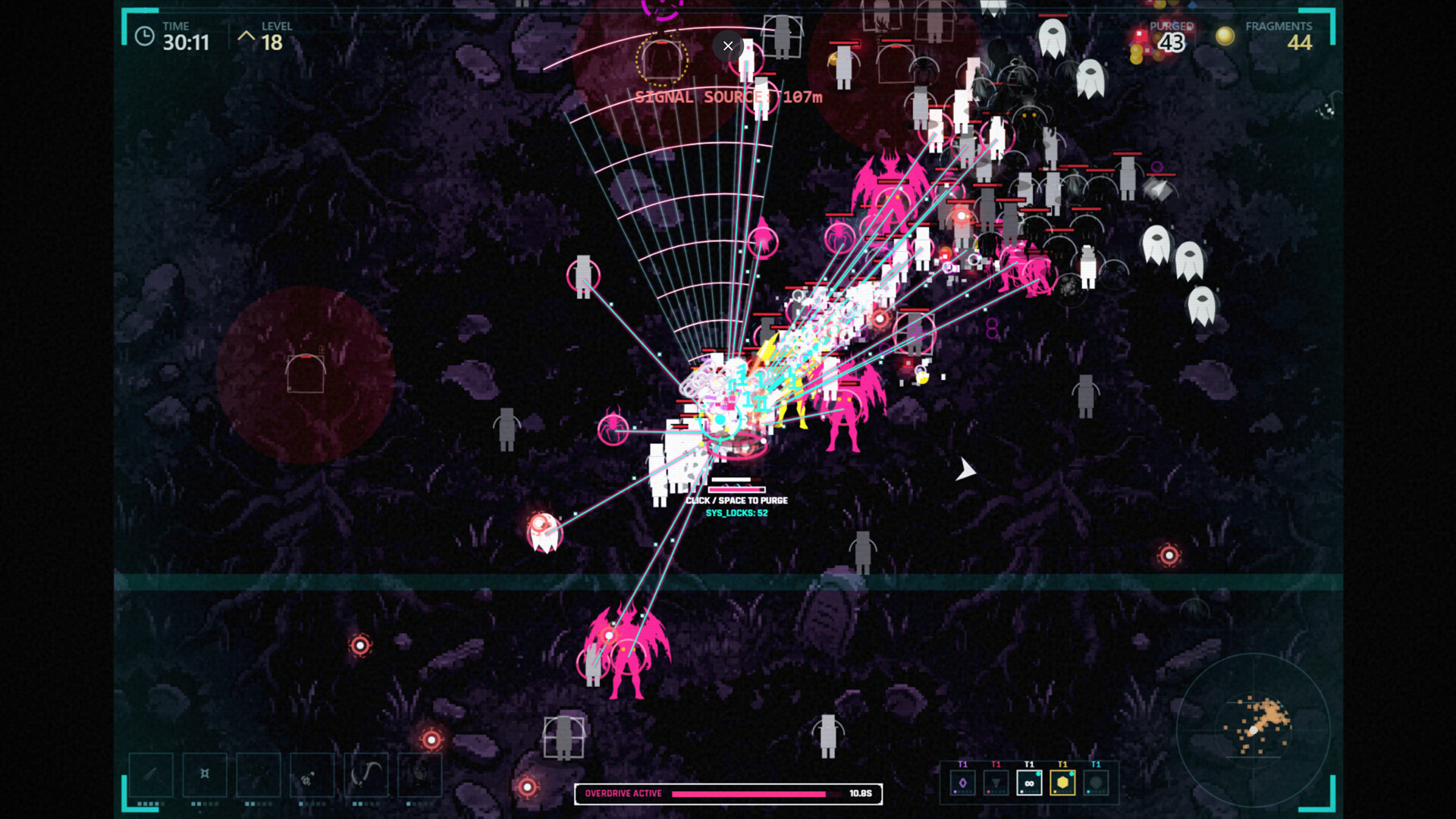
Rosebud is now powering Hollow Signal, the game Damian launched solo on Steam on July 14th under his studio Dev Solo Studio. It's a roguelike arcade shooter — think Vampire Survivors, but with a twist he was determined to add: directional shooting instead of auto-aim, giving players real control over where they fire.
The challenge: doing it all, alone
Damian initially wanted to quickly pressure-test his ideas. He turned to Rosebud to build playable prototypes fast, get them in front of his family and friends, and use that feedback to decide which ideas deserved to go to production. As a solo developer, every hour counts, and every hat — design, art, QA, publishing, marketing — sits on one head.
He'd prototyped in Unity and Unreal before. But for a one-person studio focused on tight, replayable gameplay, those engines felt like heavy lifts. "I want to keep my games smaller because I'm one person," he said. And so, out of about ten prototypes, he landed on Hollow Signal and kept developing it.
Prototype to polish, all in one place
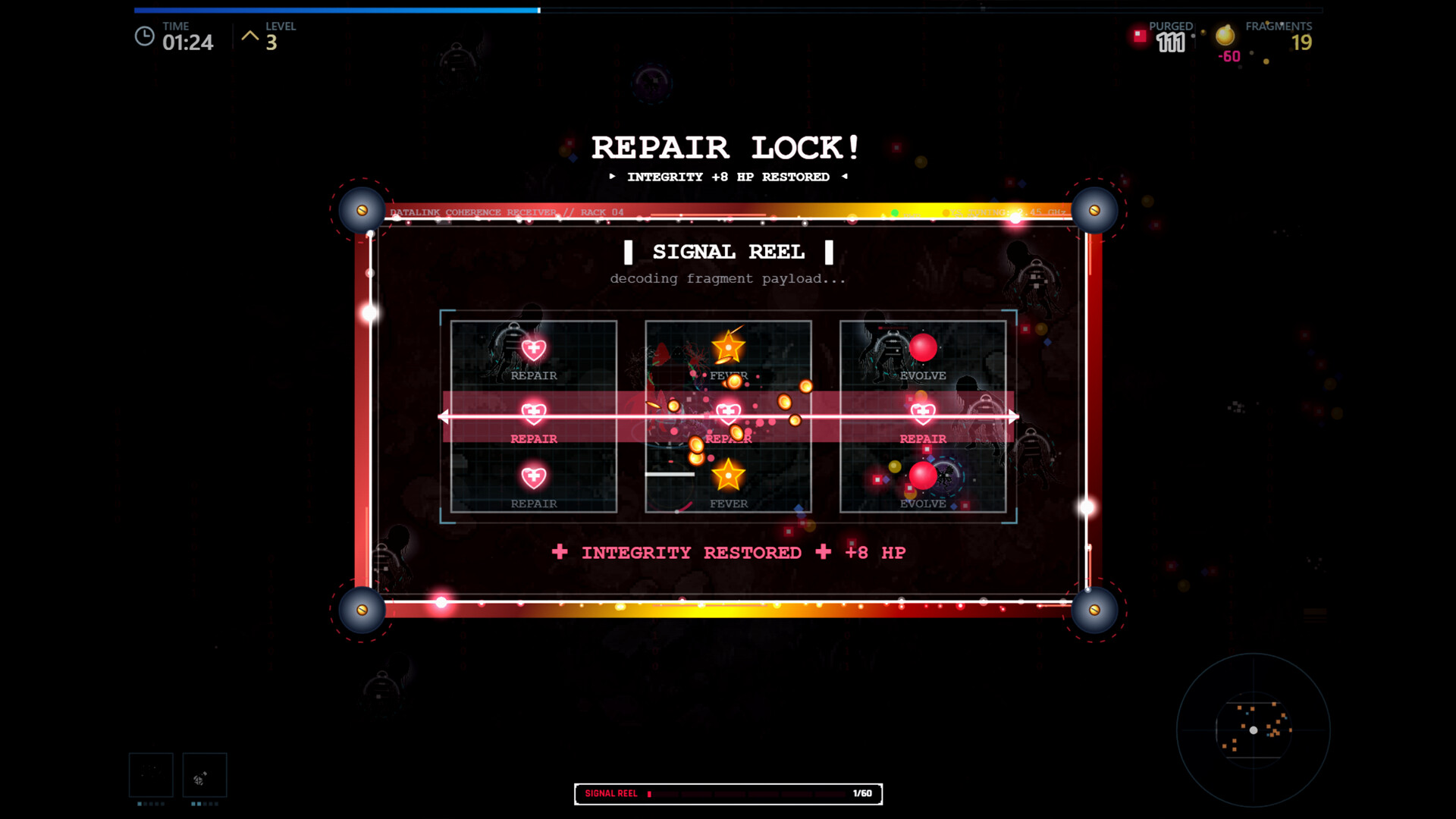
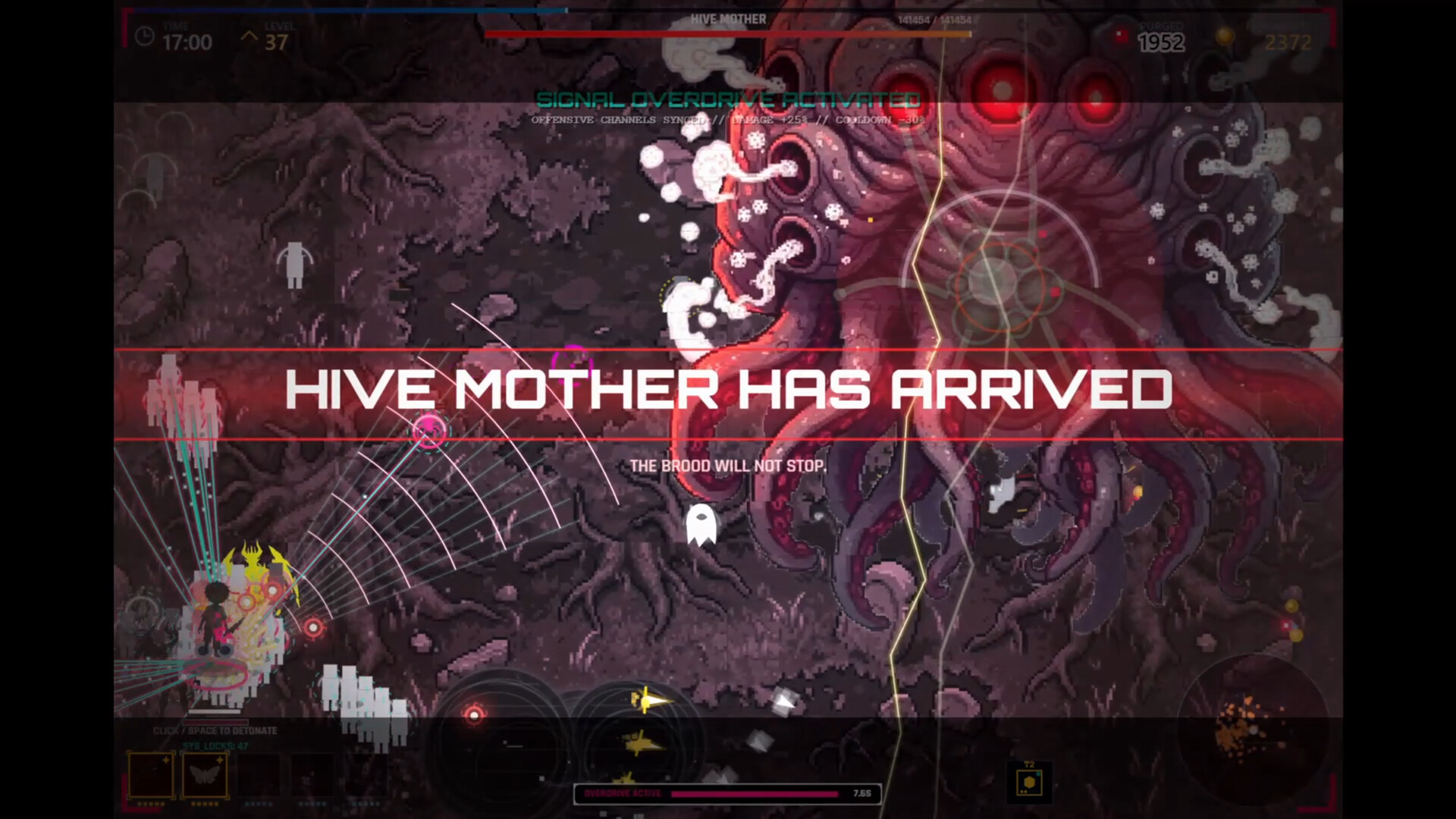
Damian started Hollow Signal from a Vampire Survivors-style template and built up from there, getting to a much more elaborate "dynamic threat escalation." Enemy pressure, encounter intensity, and combat pacing continuously evolve throughout every run. Ten-plus bosses, waves stretching past 105, a signal reel mini-game, and an "overdrive" crowd-control mechanic were all implemented as he felt the genre needed more of them.
What stands out is how far past prototype he took it. In the final stretch of development, he's genuinely proud of certain features he vibecoded:
- Localization in eight languages.
- Full controller support across keyboard/mouse, PlayStation, and Xbox.
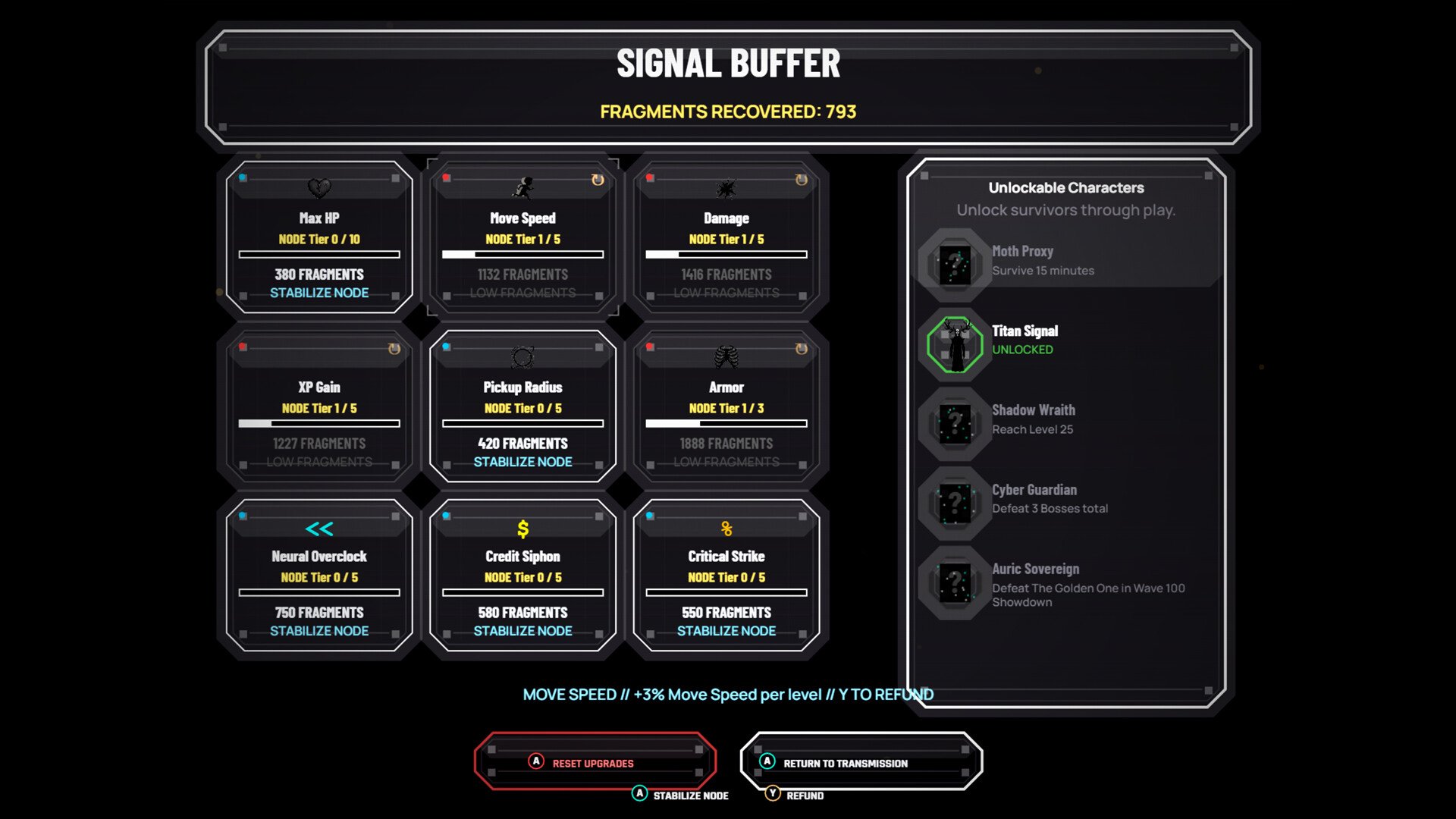
- Deep accessibility settings, including reduced flicker.
- A custom QA debug mode he built himself to skip waves, spawn and kill bosses, and test every angle without replaying an hour of gameplay each time.
"I really think it's all about the player."
That was Damian unpacking the choices behind the broad language and accessibility settings. From that perspective, Hollow Signal might just be the most broadly accessible game made on Rosebud yet.
He pairs models strategically — leaning on a cheaper option for smaller changes and jumping to the strongest model when something complex needs to go right. He's just as deliberate about how he prompts, often roughing out his instructions in OpenAI before bringing them in, because vague asks don't cut it. "It's not just like, oh please please please fix these bugs," he said. "It has to be a little bit more detailed than that." Mostly, though, he treats Rosebud like a member of his team. With 25 years of directing developers behind him, he talks to it the way he'd brief an eager junior dev — one who occasionally gets ahead of itself, runs off on a tangent, and proudly rebuilds three systems you never asked it to touch. "I feel like I talk to a human sometimes," he said. "It's just like performance review time." Knowing when to rein it in, and dropping in hard tags to keep it locked on one task, is part of the craft. The recently shipped .exe export feature, he said, "was a blessing" for getting the game into Steam.
The aesthetic is its own statement: a black-and-white pixel world punctuated by vivid, colorful collectibles — a high-contrast look he's building into a brand he calls "Noir-fi." That style carries through the whole game.
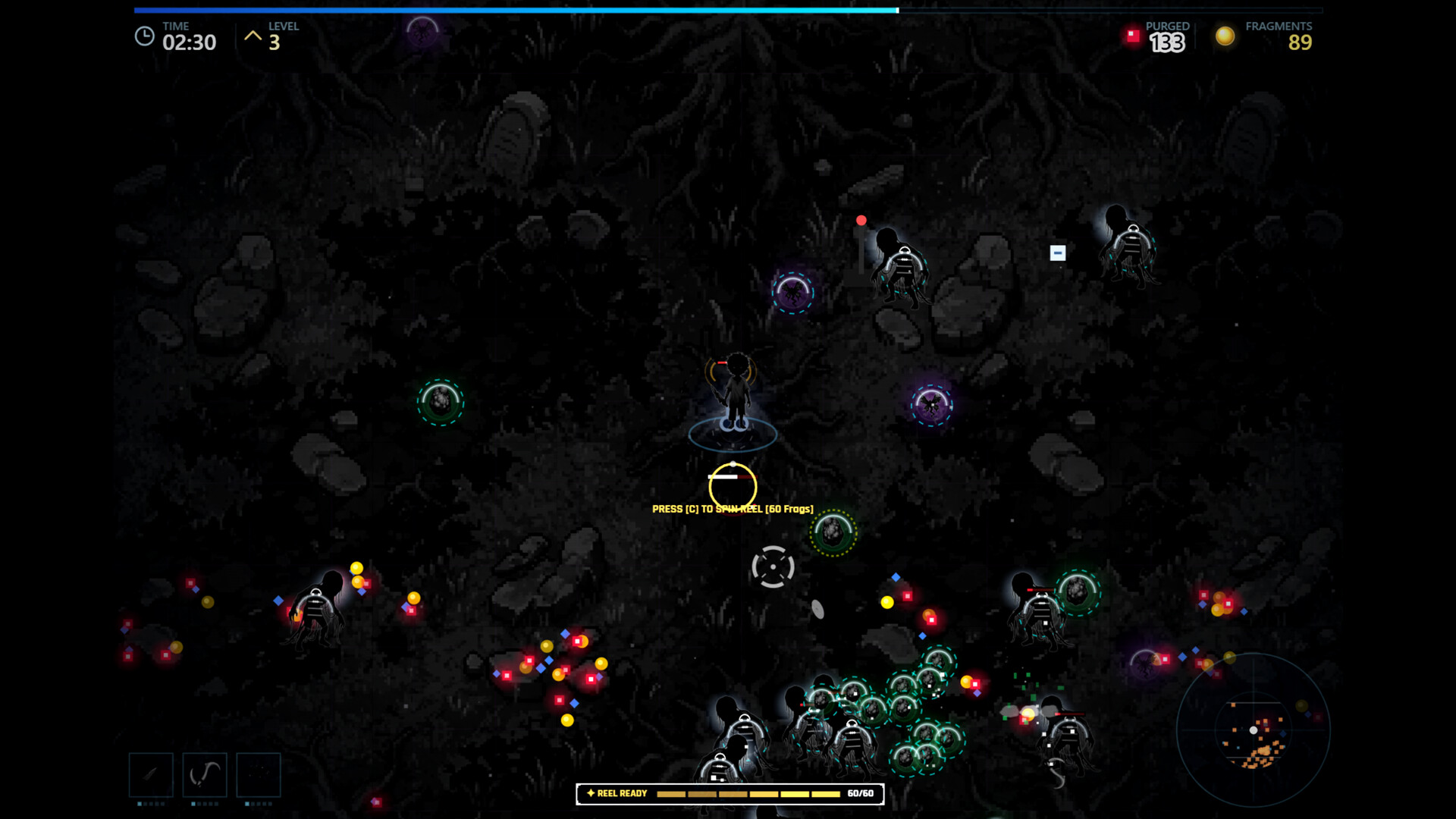
Each of the four playable characters gets its own cinematic intro, and beating a boss triggers a short "stinger" cutscene: land the final hit on the rib giant and its ribs crack apart before it crumbles in a cartoony way.
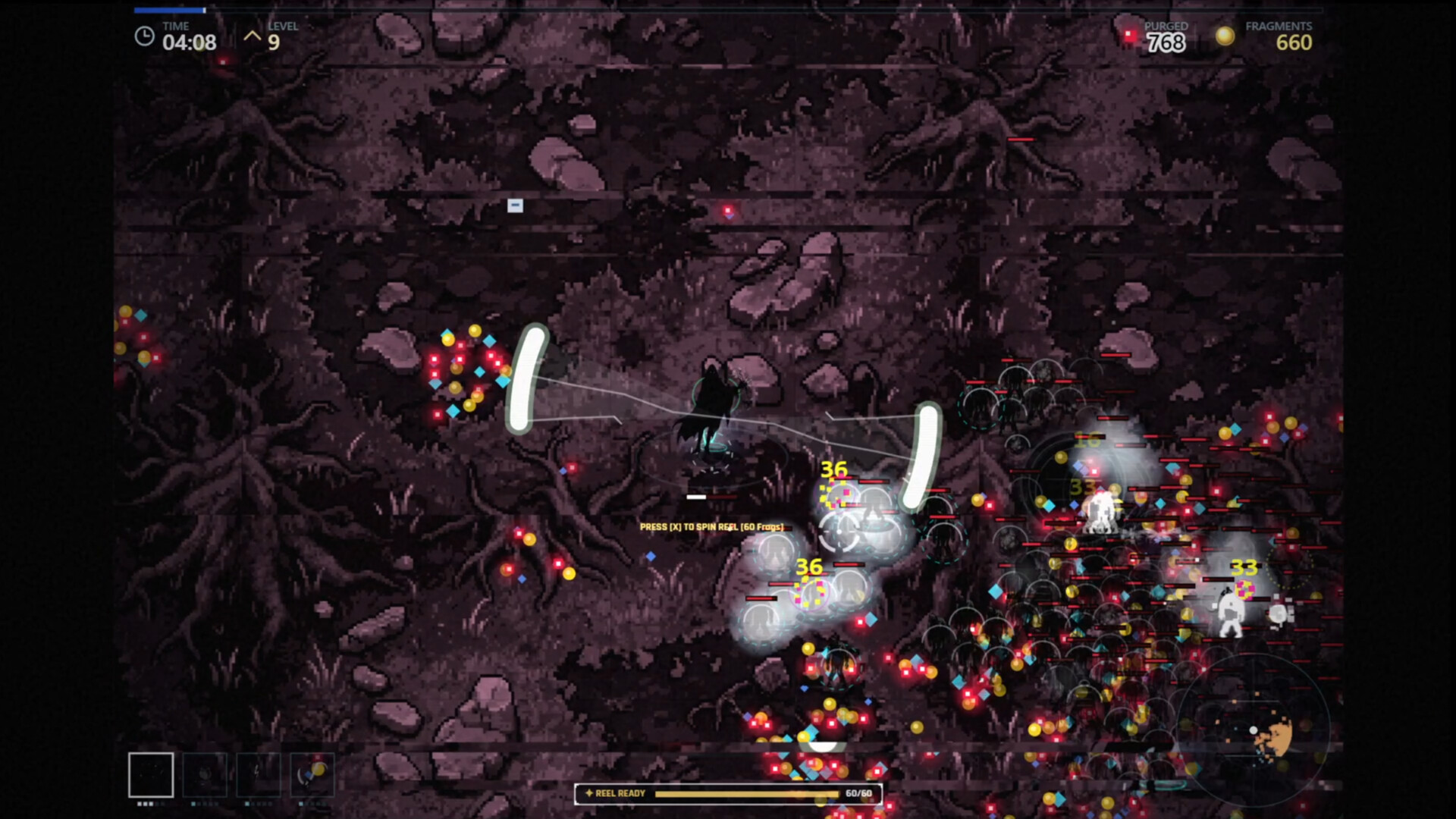
The combat has signature touches to match: a "phase tracer" trait that leaves a glowing purple trail you can loop enemies into, Tron-bike style, and bog jars you throw down to open void holes and funnel enemies into. In Hollow Signal, Damian truly combines a well-loved game concept with a striking amount of polish and personality.
The result
Damian took Hollow Signal from first prototype to an approved Steam page with a launch date in under two months — "seven to eight weeks," in his words. And he did it alone, with a feature set that would normally take a whole team: eight languages, full controller support, deep accessibility options, ten-plus bosses, and a hundred-plus waves of escalating chaos.
Maybe the best signal came from playtesters who don't even play games. They'd lose, get frustrated, pick a different character, and try again. "These people don't even play games and they're getting frustrated by losing and they want to keep going," he said. "This is why I took this this far."
For a developer who spent a quarter-century helping build other studios' games, the real payoff is finally shipping one that's entirely his own. "I've always wanted to make my own games," he said. "This is what I've been waiting for."
Play Hollow Signal
Hollow Signal is out now on Steam, and Dev Solo Studio is just getting started.
- Get it on Steam: Hollow Signal on Steam.
- Follow the studio: Dev Solo Studio on TikTok.

Andi Bucescu
Andi is the Head of Marketing at Rosebud, where she writes about the intersection of AI, creativity, and brand storytelling. She explores how generative AI is reshaping marketing strategies and creative workflows, with a focus on making complex technology accessible and cutting through the noise of modern campaigns. Her perspective is informed by undergraduate research on effective social media content and consumer psychology.