


A conversation with Dr. Sidney Chu, founder of Heydoc
The problem hiding in plain sight
If you've ever spent an hour in a pediatric waiting room, you know the scene: restless kids, tired parents, a TV in the corner playing something nobody is really watching. For Dr. Sidney Chu, a pediatrician, that scene was a missed opportunity.
"Pediaricians have a lot of things that they want to convey on important health topics, but we don't necessarily have the time to dive deep into that in a short 15-minute visit," Sidney explained. "Yet folks are spending over an hour in the waiting room."
The gap between the health education families need and what doctors can deliver became the foundation for Heydoc, a platform of interactive health education games designed specifically for clinic waiting rooms.
A two-year idea looking for a way out
Sidney had been sitting on the idea for years, but kept running into a wall that every non-technical founder hits when they try to build something software-shaped.
"I always thought there was a huge barrier to entry to this market. We had no funding, and usually you want, like, an MVP (a minimal viable product) before you get the investments to spend the hundreds of thousands of dollars that you need for game development."
So the idea stayed on the shelf. Sidney started teaching himself JavaScript, then, about two years ago, while searching for tools that might help him prototype, he came across Rosebud.
"In the beginning, it was very rudimentary, what Rosebud had. So for a lot of the asset generation and all these kinds of things, I was able to pull together a system throughout the years, and then remix all my projects over and over again. We have a very consistent theme with over about 40-something games."

What 40 games of health education actually look like
Heydoc's library now spans the questions kids and families bring into pediatric offices every day: asthma, allergies, mental health, nutrition, sexual education, breastfeeding guidance, infant care. Each full game contains mini-games where players earn XP and stars that act as passive incentives keeping kids engaged with the content long enough for it to land.
The clinical rigor behind those games is the part most players never see. "We put in many hours of research into each game," Sidney said. "We got all the content reviewed and endorsed by doctors from Harvard, Johns Hopkins, Rutgers, and the Children's Hospital of Philadelphia." Every line of dialogue, every infographic, every fact a child encounters has been vetted by specialists.
Building that volume of clinically reviewed, fully interactive content would have been impossible at a startup's budget through traditional game development. "It would have been me hiring two game developers full-time to do this," Sidney noted. "We probably wouldn't have 40 games at this point in two years. It would have taken a much, much longer time to even push out one or two."

From browser games to clinic consoles
The technical architecture is where Heydoc's pragmatism really shows. Rather than fighting to package games offline, which got complicated fast in a React Native environment, the team built around Rosebud as the hosting layer.
Each clinic gets a Heydoc console: an Android device locked into kiosk mode via an EMM (enterprise mobility management) system. The console runs a lightweight APK that loads HeyDoc's Rosebud-hosted games inside a webview.
The advantage of this setup became clear when Sidney described how the team handles content updates. "We often have to adjust updated facts and push them to all of our consoles. To do that manually would make the workload really hard, especially as we try to scale to hundreds or thousands of clinics. Hosting on Rosebud is a big pro to us, because we can just update straight from the app."
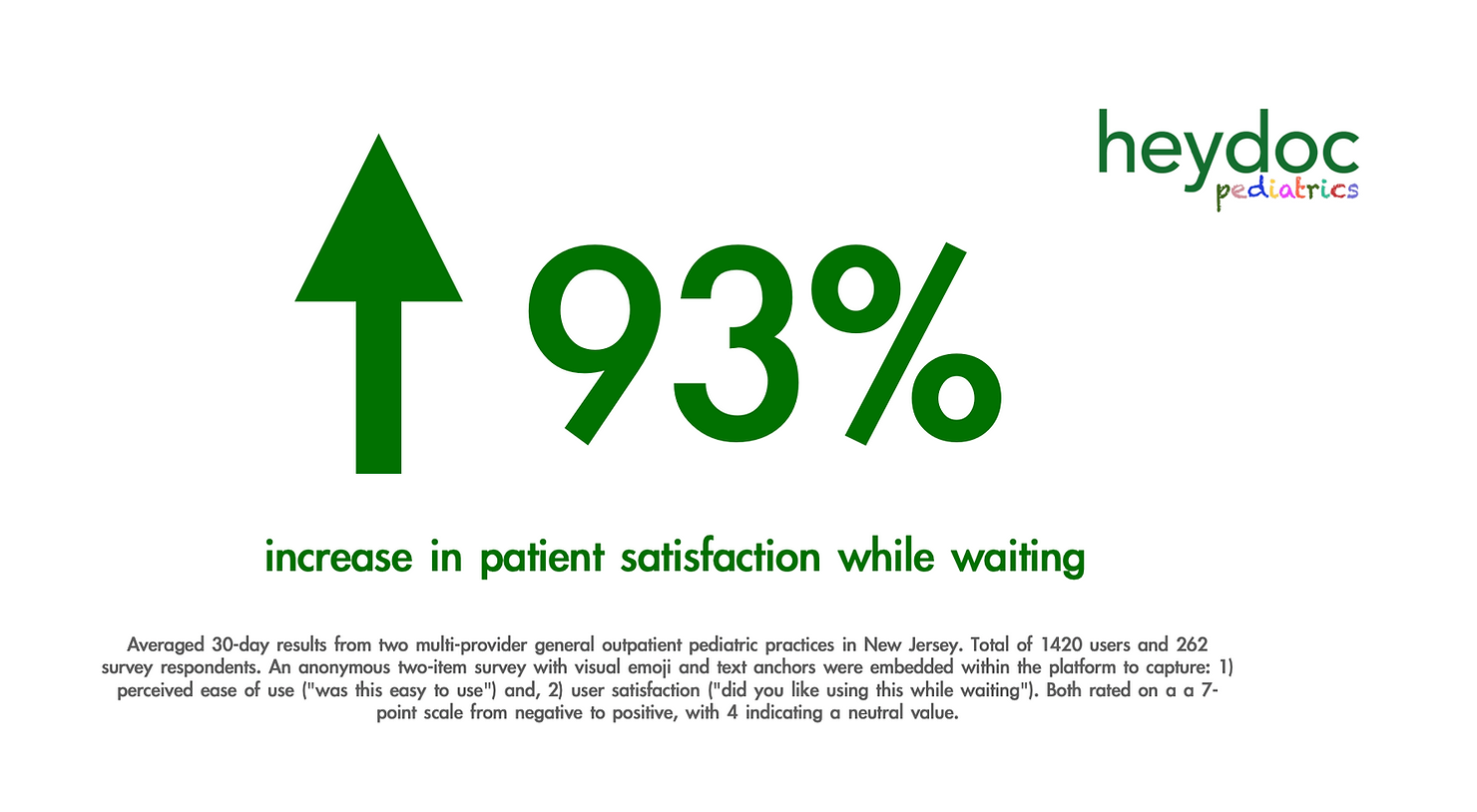
As of March, Heydoc is selling consoles to clinics. They're currently deployed in around 20 clinics, with roughly 40 consoles in the field, and growing.

A peanut butter sandwich and an EpiPen
When asked for a story that captures why the work matters, Sidney paused, then shared one a partner doctor had told him.
The doctor had realized, with some chagrin, that he'd been prescribing EpiPens to allergic patients without consistently teaching families how to use them. He'd assumed the parents would be able to handle it. Two of Heydoc's games happen to cover exactly that gap: Allergy Dodger, where players dodge falling allergens and learn what they look like, and EpiTime, which walks kids through the steps of using an EpiPen.
One of his young patients, who had played both games in the waiting room, was at school when another kid shoved a peanut butter sandwich in his face.
"It was the first time he ever used an EpiPen," Sidney said. "But he learned how to do it with Heydoc."
That's the case for waiting room education in a single anecdote: a kid, alone in an emergency, doing the right thing because of a game he played while waiting for a checkup.
What's next
Heydoc is expanding the library toward 50 games, adding adolescent topics like substance abuse prevention and broader sexual education, plus infant and toddler content covering things like SIDS prevention and feeding.
Beyond the waiting-room console line, Heydoc has a grant from the Society of Pediatric Anesthesiology to deploy tablet-based games designed to reduce preoperative anxiety in children. That program goes live in June, with the team measuring whether play actually moves the needle on anxiety before surgery.
A note from the conversation
Toward the end of the call, Sidney reflected on what Rosebud's existence has meant for builders like him, who are people with a clear problem and clinical expertise, but without a six-figure engineering budget.
"It unlocked a whole world of possibility. I was going to do this project anyway. But the how, and Rosebud being a part of that, is what made the timeline possible. There'll be more and more people who commercialize this in different spheres."
The TV in the corner of the waiting room is still there in most clinics. But in a growing number of them, it's been joined by something kids actually want to look at — and that, occasionally, teaches them how to save their own life.

Andi Bucescu
Andi is the Head of Marketing at Rosebud, where she writes about the intersection of AI, creativity, and brand storytelling. She explores how generative AI is reshaping marketing strategies and creative workflows, with a focus on making complex technology accessible and cutting through the noise of modern campaigns. Her perspective is informed by undergraduate research on effective social media content and consumer psychology.