


From AI Consumers to AI Builders: Why Rosebud Helps Kids Learn the Skills That Matter
When the easiest thing to do on a screen is scroll, watch, and ask for answers, that’s what most people will do—especially kids. The result is a quiet but important shift: a lot of young people default to consuming AI, while far fewer become capable at building with it.
And that divide matters.
In the AI era, the advantage won’t come from knowing the right buzzwords or getting the best one-shot output. The durable skill is the builder loop:
specify → test → debug → improve
That’s how engineers work. It’s also how creators work, how product teams work, and increasingly how everyone will work with AI in the real world.
Rosebud exists to make that loop accessible—so kids (and families) can practice it through something intrinsically motivating: making games.
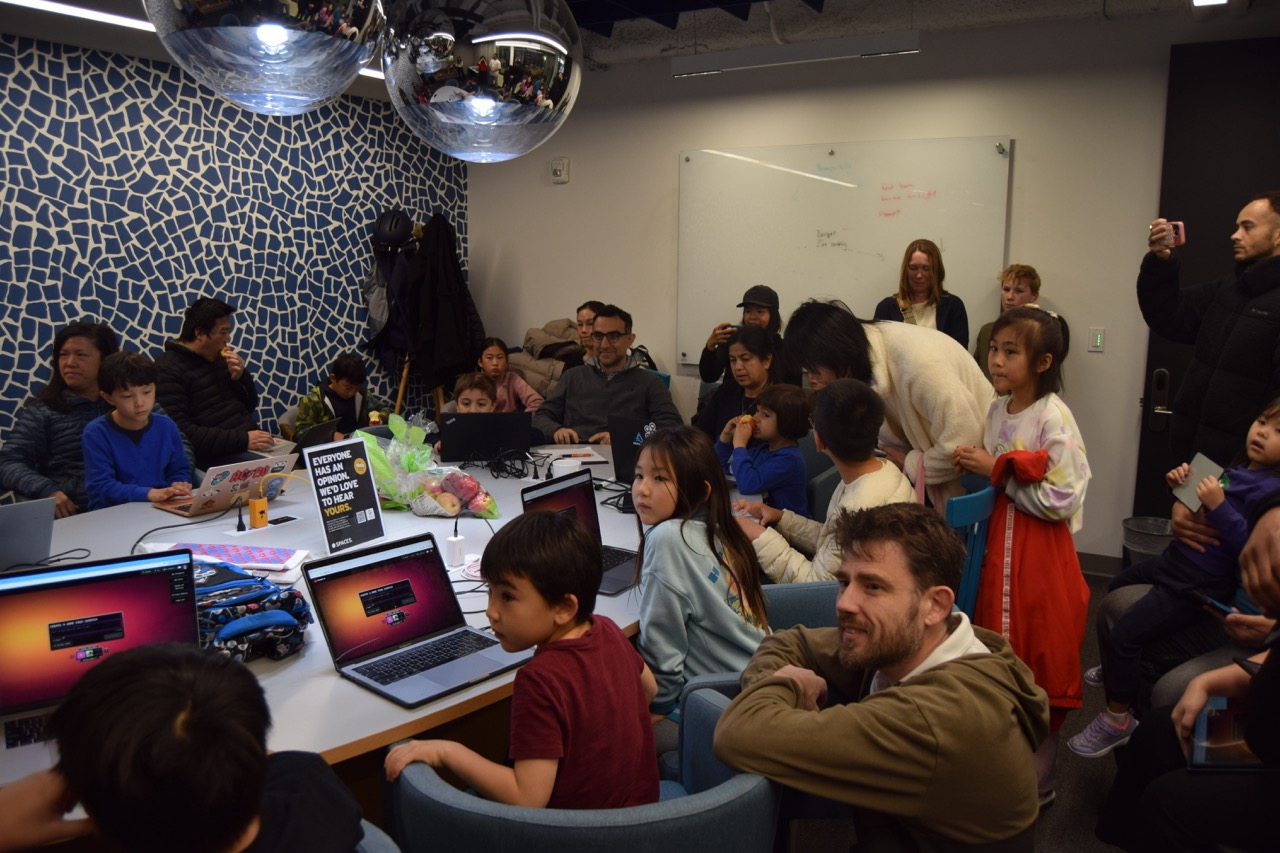
Winning games that kids have built in a few hours in our first in person kids and parents hackathon! If this excites you, read more to see how it's possible!
- Best Game: Team Battle Arena (a strategy battle game with careful battle dynamics and randomization of fighters)
- Most Creative: Coconut Farming Simulator (a themed simulator with complex upgrades and beautiful visuals)
- Best Idea: Cats on the Moon (A cat-run empire defeating dog enemies)
- Honorable Mention: Squirrel's Winter Quest (A squirrel collecting nuts and dodging foxes)
- Honorable Mention: Ice Gun Slime Freezer (A survivor game with special effects and increased difficulty)
The real risk: AI dependency without agency
A lot of “AI for kids” experiences unintentionally reinforce a pattern that doesn’t transfer:
- Ask the AI
- Get an answer
- Move on
That can feel productive, but it doesn’t build agency. It doesn’t teach how to correct mistakes, steer behavior, or iterate toward a goal when the first attempt fails.
The concern here is:
- more screen time
- less self-direction
- widening inequity (because the “builder path” is still gated by skills, time, and support)
- parents feeling locked out because they aren’t technical
We don’t think the solution is to shame screen time or add more lectures.
We think the solution is to change what screens are for.
Why games are the best on-ramp to real AI skills
Games are one of the few creative mediums where kids naturally accept difficulty.
Not because they’re told to—but because the reward is immediate and meaningful:
- it becomes fun
- it becomes playable
- other people can try it
If a character behaves strangely, the game feels wrong.
If the rules are inconsistent, the game breaks.
If the instructions are vague, the output becomes unpredictable.
That “tight feedback loop” is the whole point. It turns learning into doing.
And crucially: it’s not abstract. Kids don’t need to be convinced that debugging matters. They can feel it when their game isn’t fun yet.
What Rosebud teaches
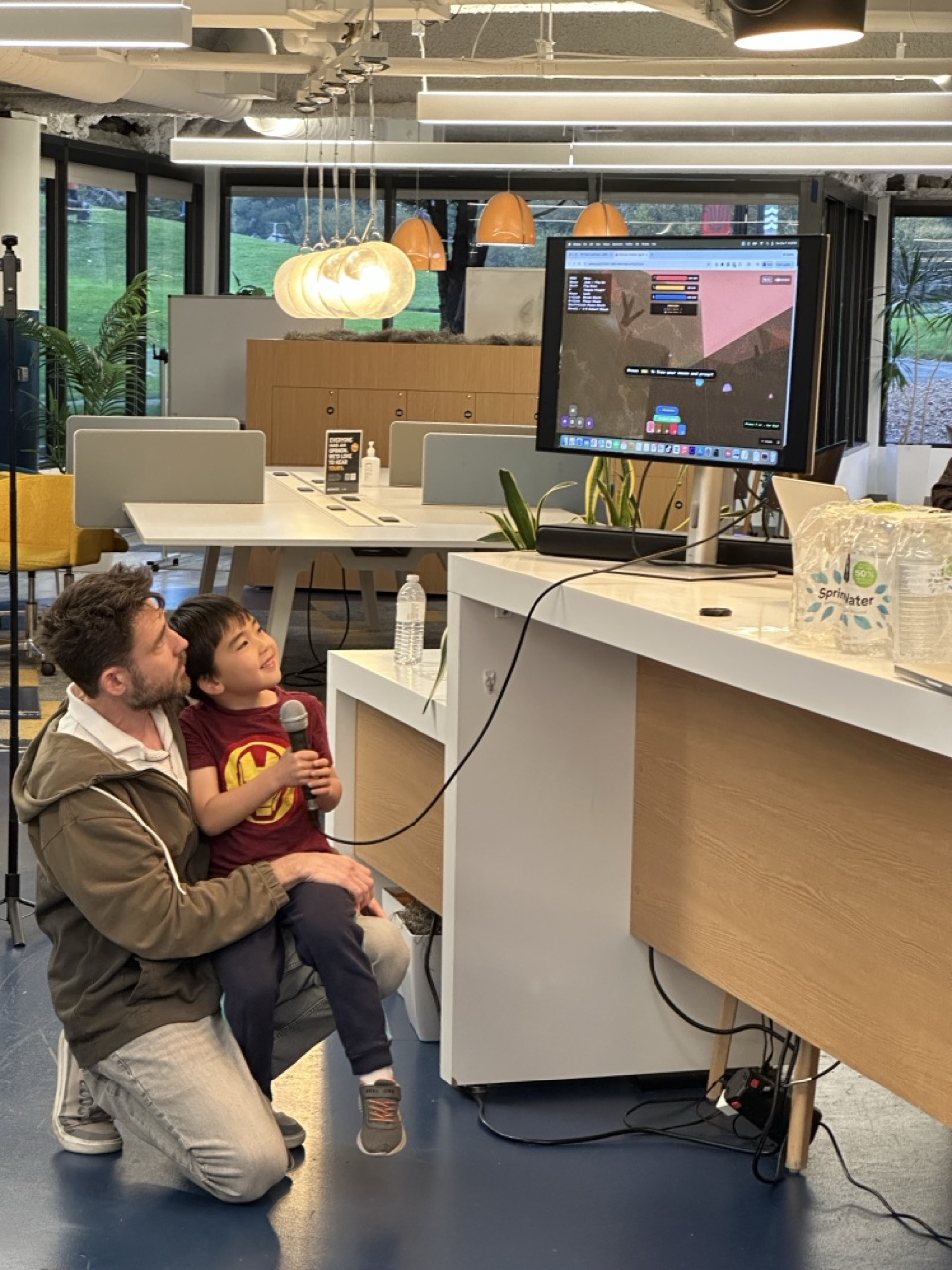
Rosebud isn’t a coding class, and that is perhaps why it's so fun. It’s a creation environment that pulls kids into the builder mindset naturally.
When kids make games with Rosebud, they practice:
- Problem decomposition: turning “make a game” into mechanics, goals, and rules
- Causal reasoning: “why did that happen?” and “what should change?”
- Iteration: making small changes, testing, and repeating
- Debugging with AI: treating prompts like hypotheses, not wishes
- Systems thinking: how agents, rules, and constraints interact
These are the same mental moves that show up in engineering work—just learned through a medium kids are excited about.
Parents don’t need to be technical to support this
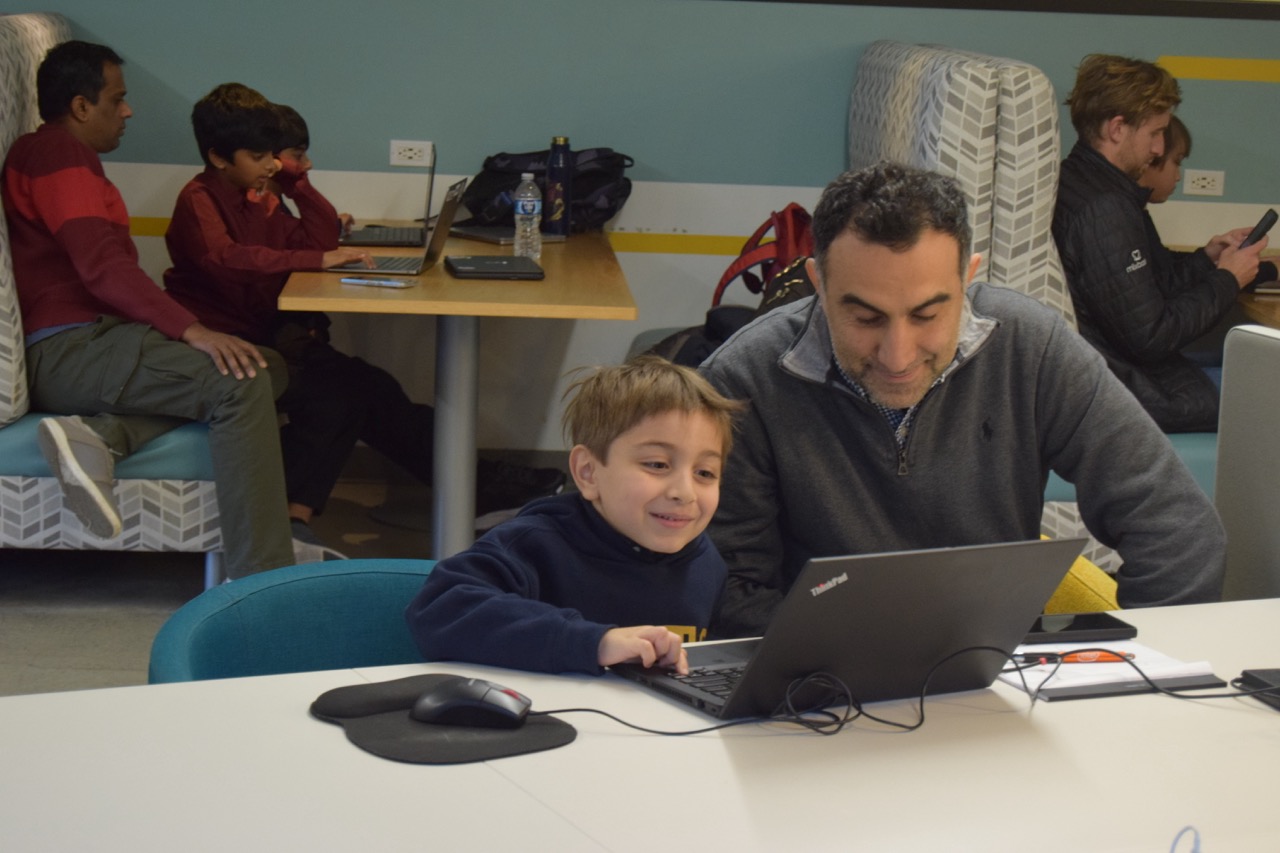
One of the most hopeful things we’ve seen is how well this works as a family activity.
In our kid + parent hackathons, parents often start by saying something like:
“I’m not technical. I can’t help with AI.”
But they can. Because the support kids need isn’t “know how to code.” It’s:
- help clarifying the goal (“what should the player do?”)
- asking good questions (“what caused that bug?”)
- encouraging iteration (“try changing one rule at a time”)
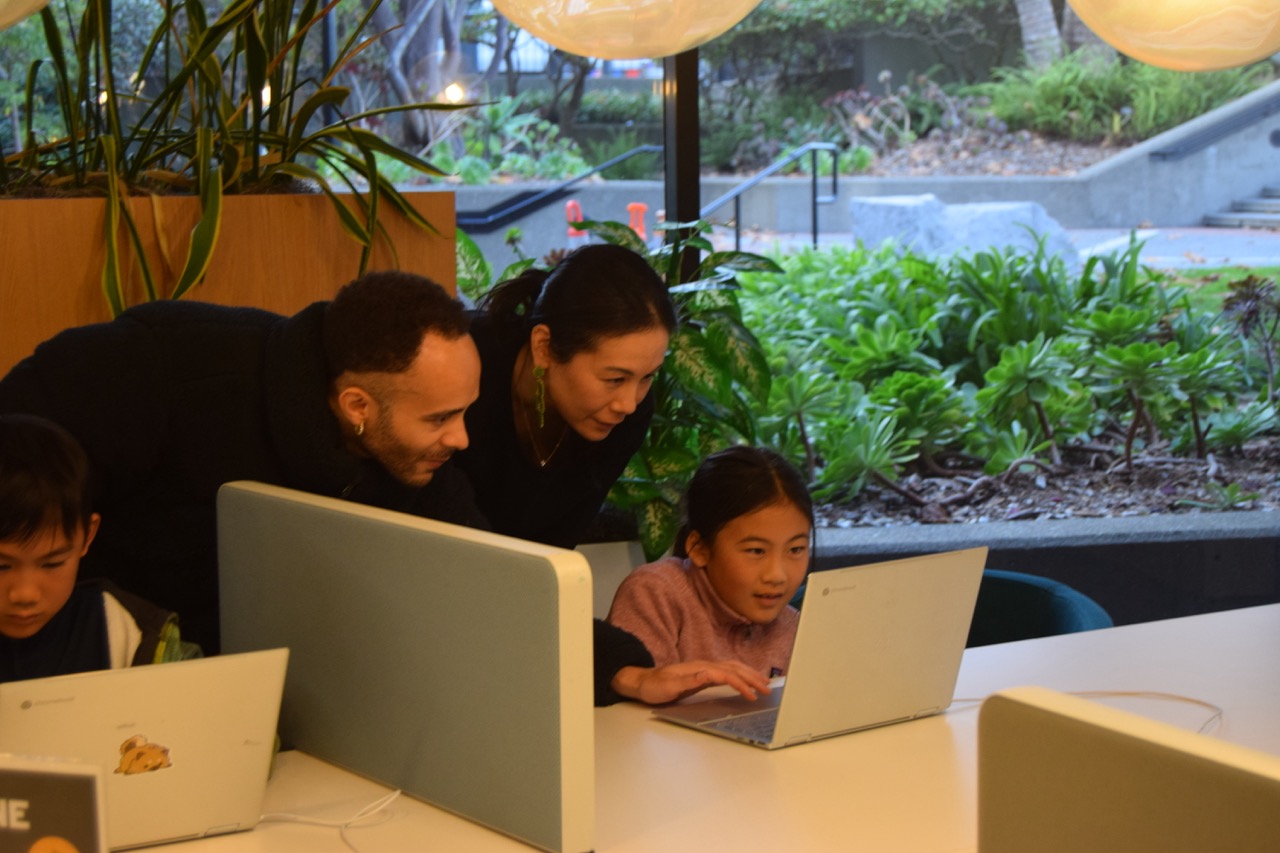
Parents become co-pilots. Kids become builders. The dynamic is collaborative, not isolating.
And the outcome isn’t a worksheet or a chat log—it’s a playable artifact they can share.
Proof that this works, observed from our live hackathons
A good family hackathon makes “the builder loop” social:
- kids show each other progress
- ideas spread
- ambition rises
- iteration becomes normal
A lightweight format we liked:
90–120 minute Family Build Night
- 10 min: show 2 example games (fast and inspiring)
- 60 min: build + iterate (facilitators circulate)
- 20 min: playtest each other’s games
- 10 min: share-outs (“what broke / how you fixed it”)
This works in libraries, community centers, weekend programs, and after-school environments. Schools can use it too—but the point is: it’s not dependent on a school system to be effective.
The bigger goal: capability, not consumption
We’re not trying to get kids to spend more time on screens.
We’re trying to ensure that when they do, they’re practicing agency:
- making things
- fixing things
- understanding why things behave the way they do
- building confidence that they can direct powerful tools
That’s what preparation looks like in an AI-native world.
Want to bring Rosebud to your community?
If you run a nonprofit, library, school, or youth program and want to use Rosebud let's chat. Reach out at support@rosebudai.com!
- Family Build Nights (parents + kids)
- youth hackathons
- facilitator guides and templates
- artifact-based evaluation (show what was built, not just attendance)
If you’re a parent, you don’t need to be technical. Your job isn’t to know the answers—it’s to help your child keep iterating toward something that works.
Creation is a habit. Rosebud makes it fun to practice.

Lisha Li
Lisha Li is the CEO and founder of Rosebud. She holds a PhD from UC Berkeley, where her research focused on deep learning for clustering, community detection, and their information-theoretic bounds. She is also an angel investor focused on early stage AI startups. Lisha writes about how to productize frontier AI research, especially focused on making products for builders and creators. She also creates content on the evolution of creative tools, and the broader impact of AI on technology and society.