


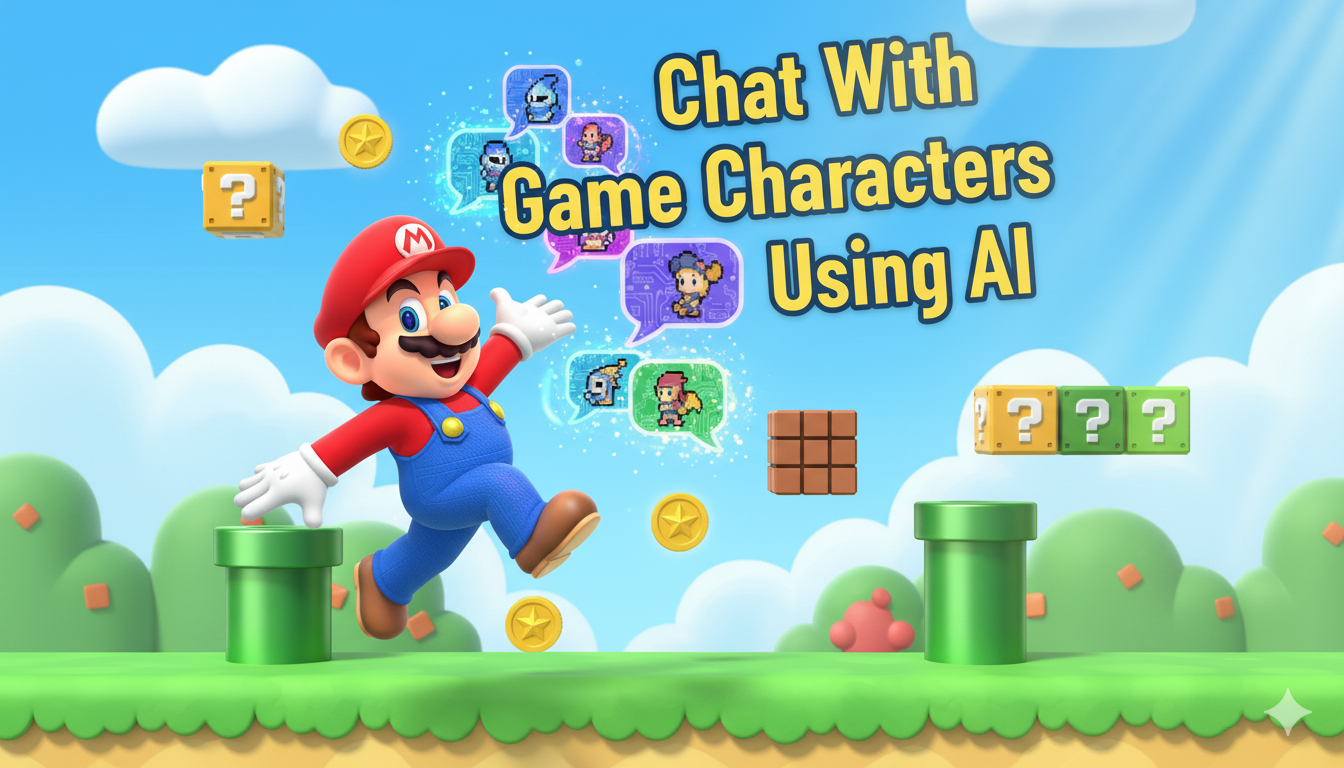
Chat With Game Characters & NPCs Using Google Nano Banana + Rosebud AI
Chatting with game characters and NPCs is evolving from a supporting feature into a core gameplay mechanic. Instead of clicking through static dialogue trees, players now expect characters that react, remember, and feel emotionally present. With Google Nano Banana handling expressive character visuals and Rosebud AI powering AI-driven gameplay, creators can design chat-based NPC games that feel alive, replayable, and deeply engaging.
This article explores why NPC chat works so well—and how to build a real game around it using an iconic character like Mario.
Part 1 — Why chatting with game characters and NPCs works
From the earliest RPGs, talking to NPCs has been how players learned about the world. Dialogue wasn’t just informational—it established tone, personality, and emotional stakes. Modern AI chat takes this further by letting NPCs respond dynamically instead of repeating prewritten lines.
When NPCs can adapt their tone, remember recent interactions, and react emotionally, players begin to treat them less like interfaces and more like characters. This creates immersion not through realism, but through responsiveness. The player feels acknowledged.
In practice, NPC chat improves games by:
- making the world feel reactive rather than scripted
- encouraging emotional attachment to characters
- increasing replay value through evolving conversations
The result is a loop where players return not for rewards, but to continue a relationship.
What popular games taught us about NPC interaction
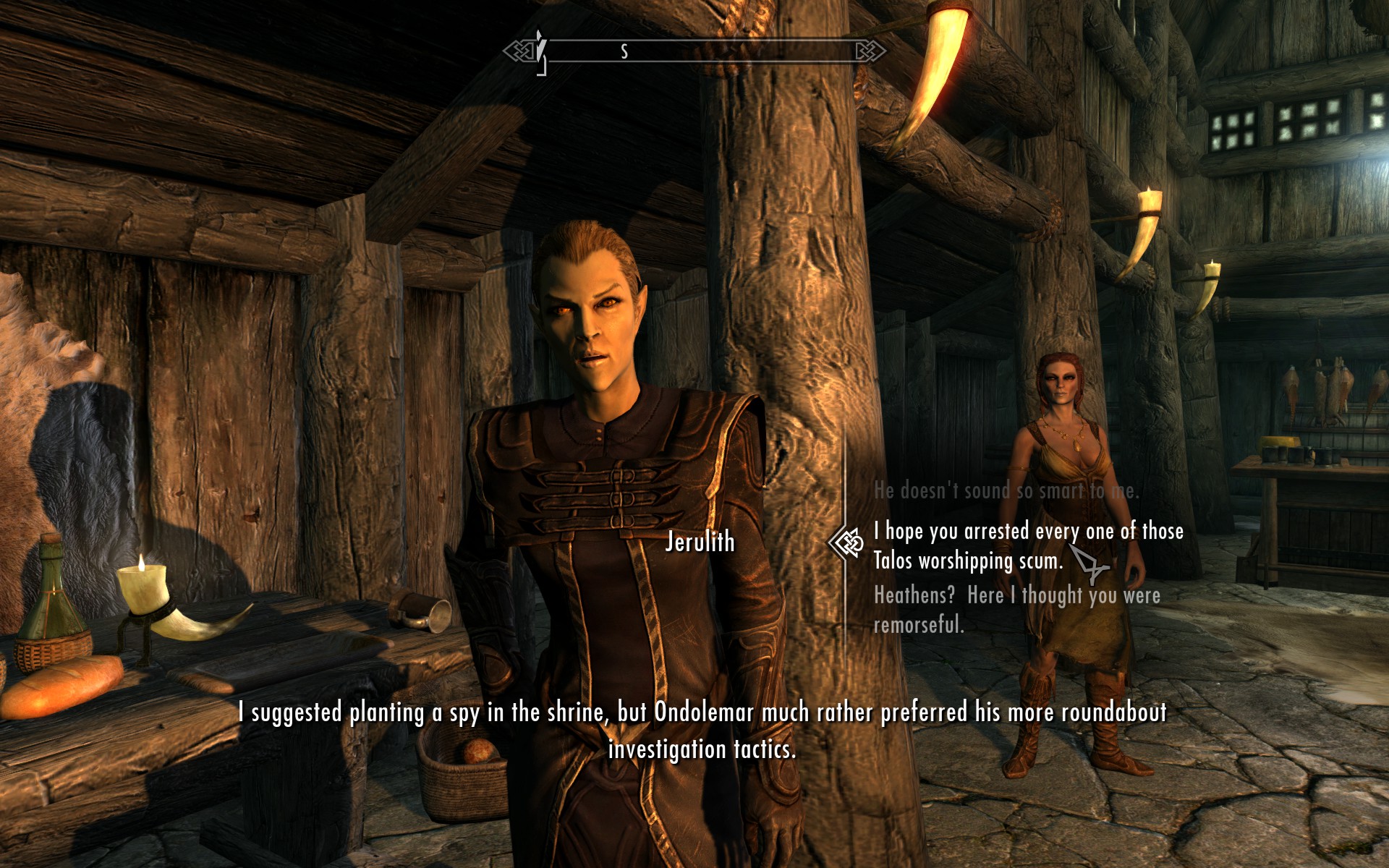
Open-world games demonstrated that players care deeply about how NPCs behave, even when those characters aren’t central to the story.
In Grand Theft Auto V, ambient dialogue and reactive NPC behavior make the city feel socially alive. Small comments, insults, or reactions create memorable moments without complex systems.
In The Elder Scrolls V: Skyrim, NPCs feel grounded in the world through routines, lore, and consistent personalities. Even simple conversations reinforce the fantasy of living in that universe.
The shared lesson is simple:
NPCs don’t need advanced intelligence—they need consistency, context, and personality.
Part 2 — A chat-based game built around Mario
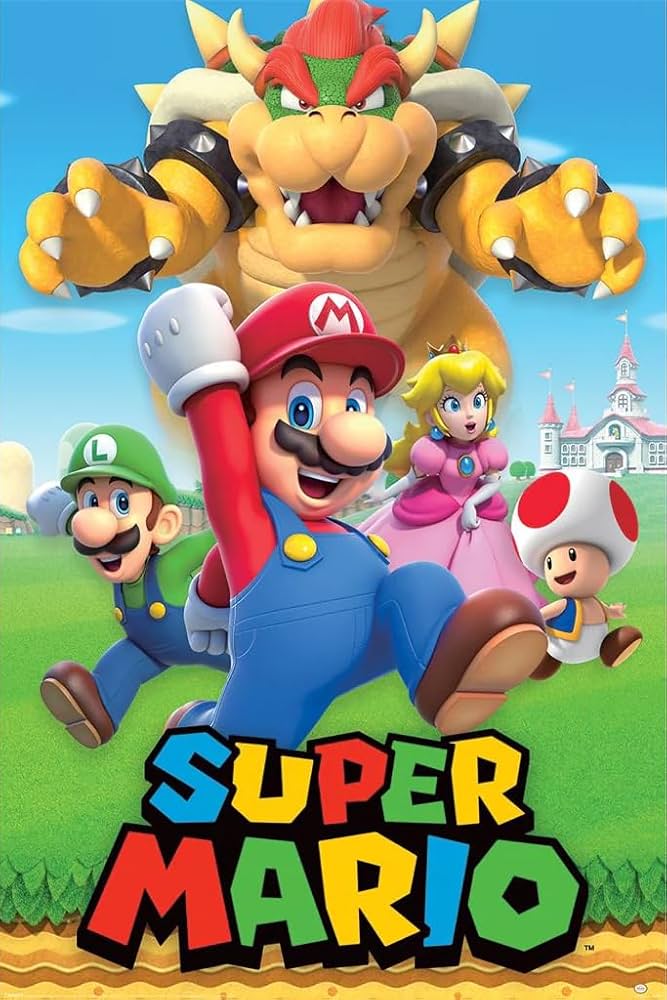
Now let’s apply these principles to a concrete game idea using Mario, owned by Nintendo.
Instead of controlling Mario in a platforming level, the player interacts with him through conversation. The game fantasy shifts: Mario becomes a mentor and companion rather than an avatar. Talking is the gameplay.
This type of game works especially well between sessions, on mobile, or as a social-first experience where personality matters more than reflexes. You can build it on Rosebud AI.
How the Mario chat game works
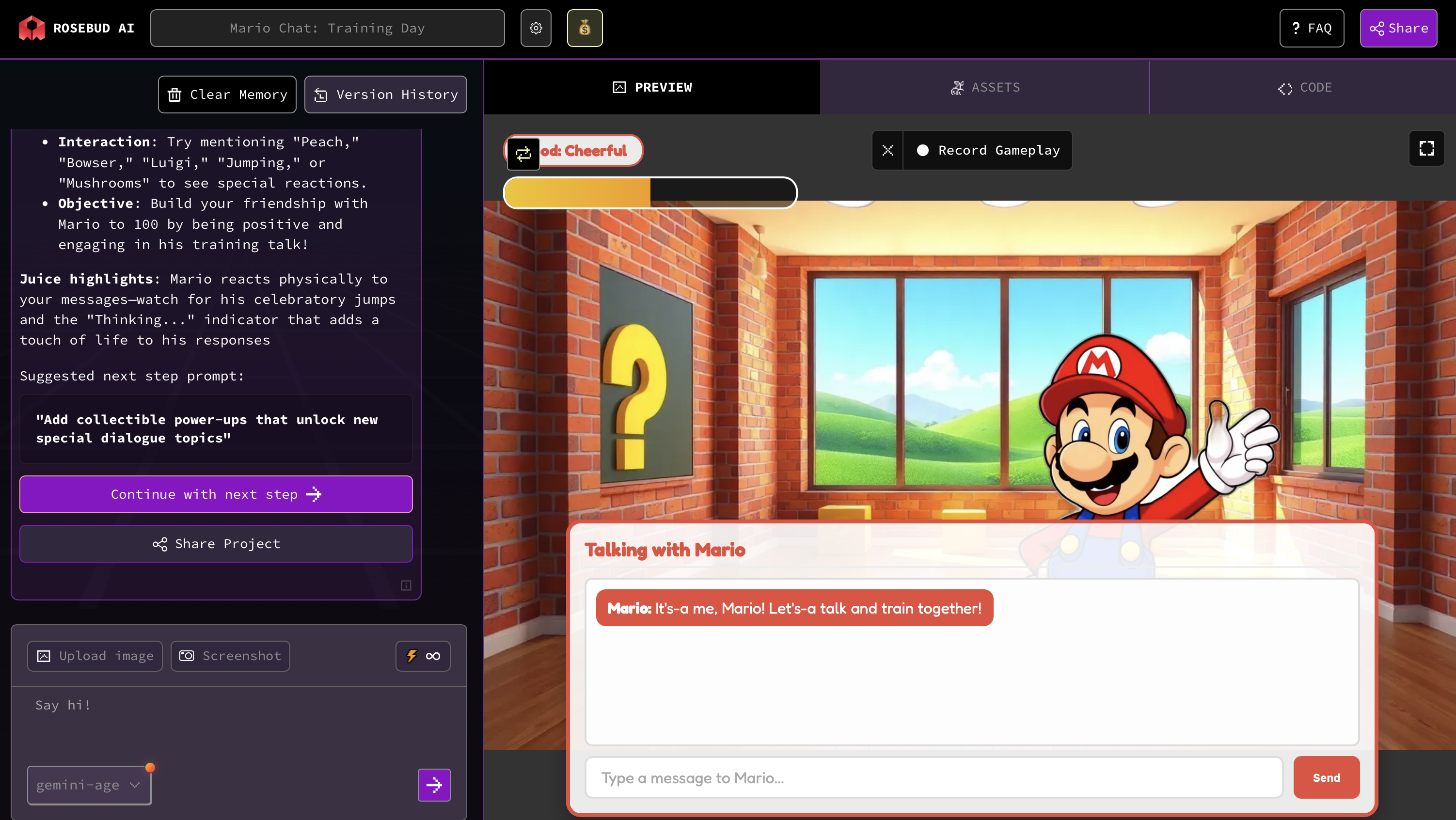
At its core, the game is built around a simple conversational loop. The player sends a message, Mario replies in character, and the relationship subtly evolves. Over time, conversations unlock new topics, challenges, and emotional responses.
Progression is lightweight but meaningful:
- a friendship meter reflects how the player interacts
- Mario’s mood shifts based on recent conversations
- daily challenges or tips encourage return visits
The goal isn’t to “beat” Mario, but to build familiarity and trust with him.
Designing Mario’s personality for chat gameplay

For a chat-based NPC game, personality matters more than mechanics. Mario’s voice must remain instantly recognizable: optimistic, energetic, and supportive. Responses should be short and warm, never overwhelming the player with text.
Occasional catchphrases add charm, but restraint is important. Overusing them breaks immersion. The character should feel like Mario on a good day—focused on encouragement, progress, and fun.
Conversation naturally revolves around:
- motivation and positive reinforcement
- platforming advice framed as training
- light humor and world flavor
Consistency is what makes the character believable over time.
Short game prompt (≈500 characters)
Rosebud AI — Game Prompt
Create a chat-based game where the player talks with Mario, the official Nintendo character, inside a Mushroom Kingdom–style training room. Gameplay is driven by conversation. Mario is upbeat, friendly, and encouraging, replies in short energetic messages, and occasionally uses classic catchphrases. The game includes a friendship meter, simple mood states, and short-term memory. Conversations unlock tips, encouragement, and daily challenges tied to Mario’s world.
Creating Mario visuals with Google Nano Banana
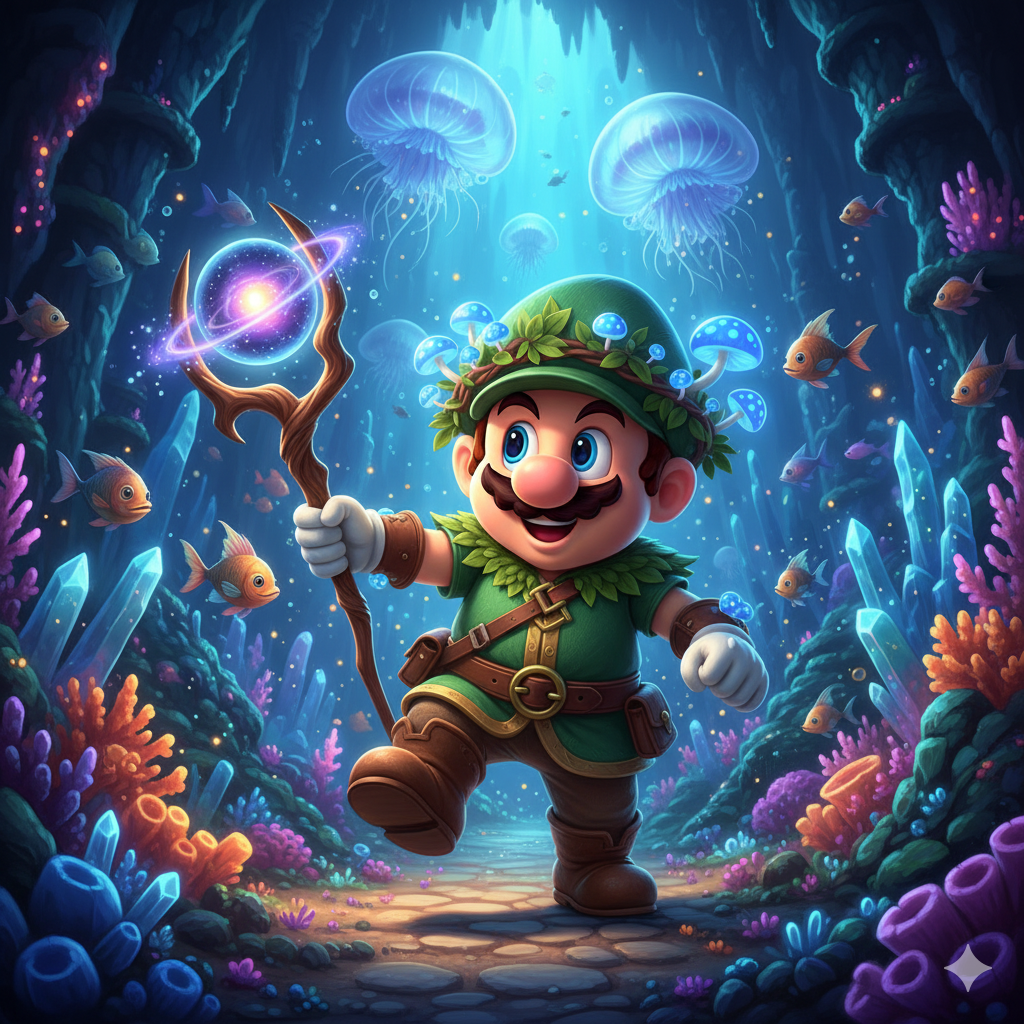
Visual presence is critical in a chat-based game. Google Nano Banana is well suited for generating consistent Mario portraits that can live inside a chat interface.
The most effective approach is to start with a clean, waist-up portrait and build variations from it. A friendly expression, simple background, and subtle glow effects help reinforce the idea that Mario is actively “there” with the player.
Small details—eye direction, posture, expression—do more for immersion than complex backgrounds.
Practical advice for making NPC chat feel like a game
To keep the experience engaging, NPC chat should feel structured but natural. Short messages are easier to read and feel more conversational. Quick reply buttons help guide players without limiting expression.
Most importantly, the character should always feel intentional. If Mario reacts emotionally, remembers context, and stays in character, players will forgive simple systems and return for the interaction itself.
Final takeaway
Chatting with game characters and NPCs is no longer just a narrative tool—it’s becoming a standalone game format. By combining Google Nano Banana for expressive visuals and Rosebud AI for conversational gameplay, creators can build character-driven chat games that feel personal, replayable, and emotionally engaging.
In these games, conversation isn’t filler.
It’s the core mechanic.

Patrick Moumiet
Patrick is a marketer at Rosebud with a background as a content creator and social media strategist. He has launched courses and coaching programs in social media marketing and content creation, coaching 500+ large-scale influencers customers. On the Rosebud blog, he writes about consumer AI and how to make money with AI, exploring ways to combine state-of-the-art models with Rosebud’s creative tools.