


Bitcoin Crash: What Just Happened — and How to Train Your Brain to Avoid the Next One
Bitcoin once again reminded investors why it’s one of the most emotionally demanding assets in the world. The recent crash wasn’t a freak event or a random failure — it was the predictable outcome of macroeconomic pressure colliding with leverage, speculation, and human psychology. These cycles repeat because the conditions repeat, and because people react the same way every time.
Understanding why this happened is the first step.
Part 1 — Why Bitcoin Crashed (Macro + Market Reality)
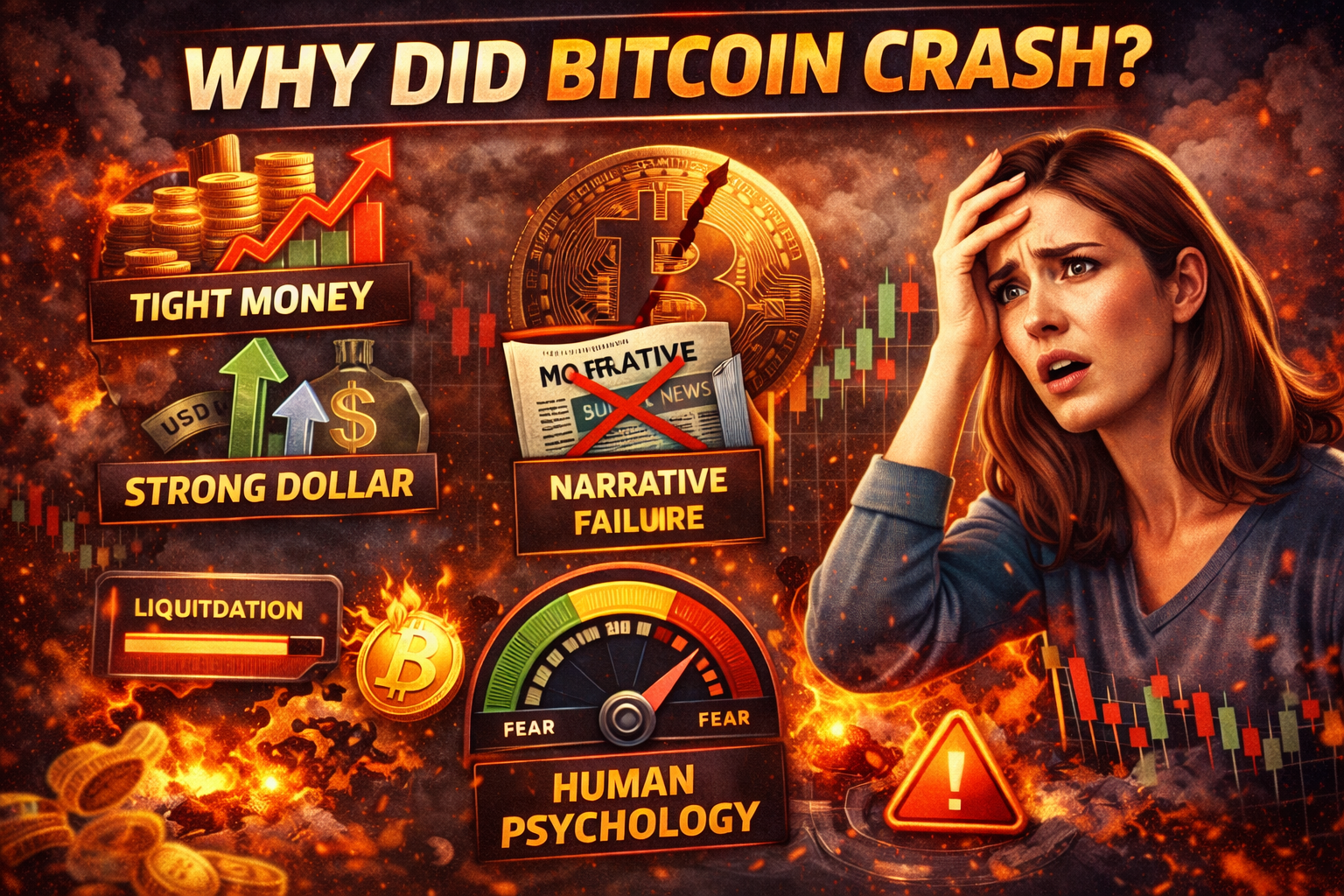
1. Tight Money Breaks Speculative Assets
Bitcoin thrives in environments where money is cheap and liquidity is abundant. When central banks keep interest rates high, capital naturally flows away from speculative assets and toward safer, yield-producing instruments. This doesn’t mean Bitcoin is “dead” — it means the environment is hostile to risk.
Key effects:
- Higher rates reduce speculative demand
- Liquidity dries up across markets
- Investors prioritize capital preservation
- Bitcoin becomes more volatile, not safer
2. Leverage Got Wiped (Again)
Leverage is gasoline on a fire. When too many traders use borrowed money, even small price drops trigger forced liquidations. These liquidations cause rapid cascades, turning normal corrections into violent crashes within minutes or hours.
What accelerates crashes:
- High open interest on futures
- Overconfidence during uptrends
- Stop-loss clusters triggering together
- Forced selling regardless of price
3. Narrative Exhaustion
Markets move on stories — until those stories stop working. ETF approvals, halvings, and bullish headlines can support prices only when liquidity allows it. When macro pressure dominates, even positive news loses impact, signaling market exhaustion.
Warning signs:
- Bullish news with weak price reaction
- Slower recoveries after dips
- Increased volatility without upside
- Sentiment turning fragile
4. Human Psychology Never Changes

Every Bitcoin cycle exposes the same emotional traps. Greed peaks near market tops, while fear dominates near bottoms. Most losses don’t come from lack of information — they come from emotional decision-making under pressure.
Common mistakes:
- Buying after large rallies
- Holding too long waiting for “just a bit more”
- Freezing during reversals
- Selling only after panic sets in
Part 2 — Train Your Brain With a Bitcoin Crash Game
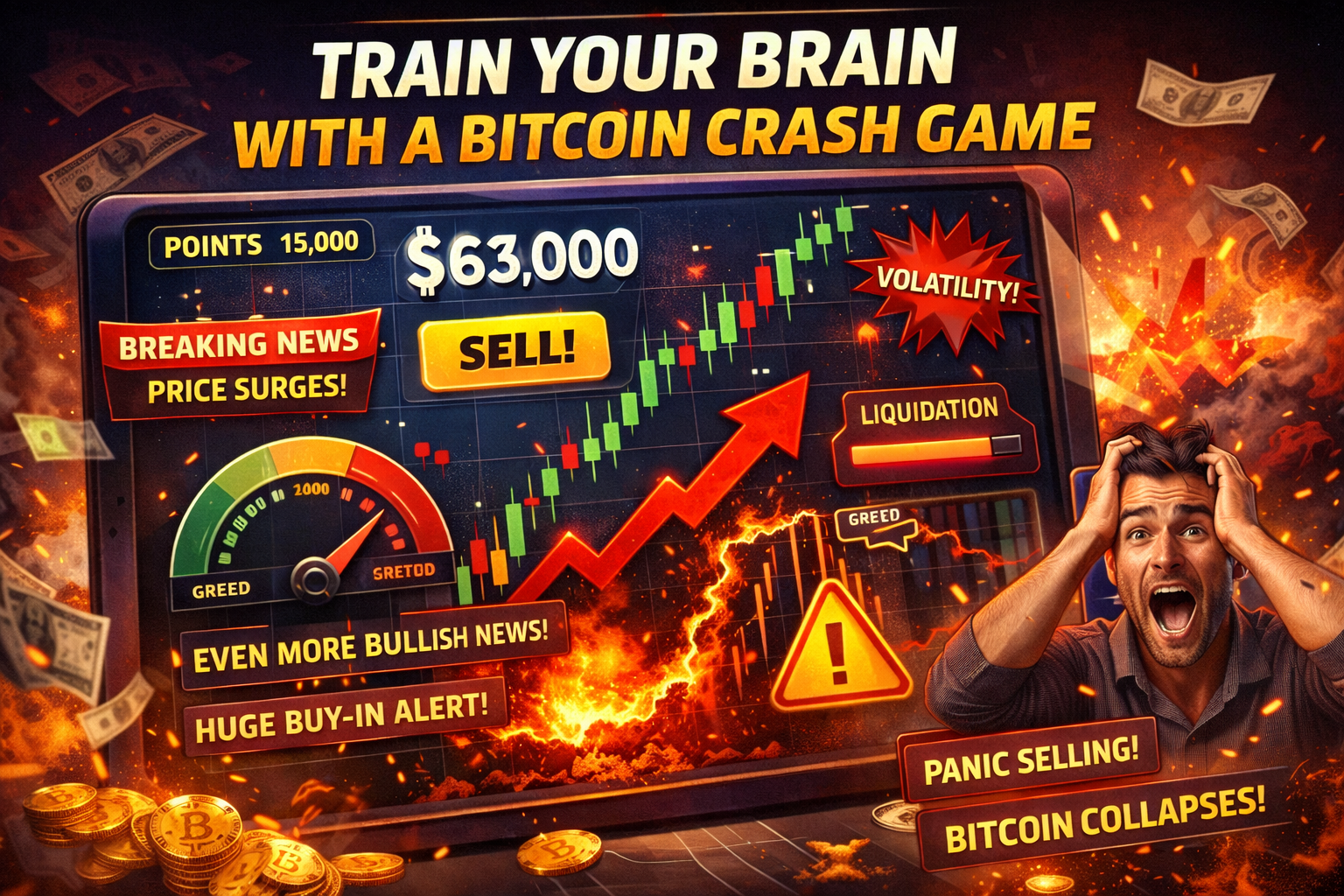
Instead of learning these lessons with real money, imagine training them through a fast, replayable game. A Bitcoin crash game removes financial risk while preserving psychological pressure — the exact environment where most traders fail.
The goal isn’t to predict the top perfectly.
The goal is to exit before disaster.
Game Concept (Simple but Powerful)
The game mimics real market behavior using exaggerated but familiar signals. As price rises, the game subtly pressures players to stay longer, making exits emotionally difficult — just like real markets.
Core mechanics:
- Auto-rising Bitcoin price
- Increasing rewards for holding
- Fake news and hype indicators
- Volatility and leverage meters
- Sudden, unavoidable crash events
What This Game Teaches You (Without You Noticing)
The brilliance of this approach is that it teaches discipline subconsciously. Players don’t memorize rules — they feel consequences. Over time, better behavior emerges naturally.
Skills developed:
- Early exit confidence
- Reduced greed bias
- Faster decision-making
- Risk awareness under pressure
- Acceptance of imperfect timing
🎮 400-Character Prompt for Rosebud AI
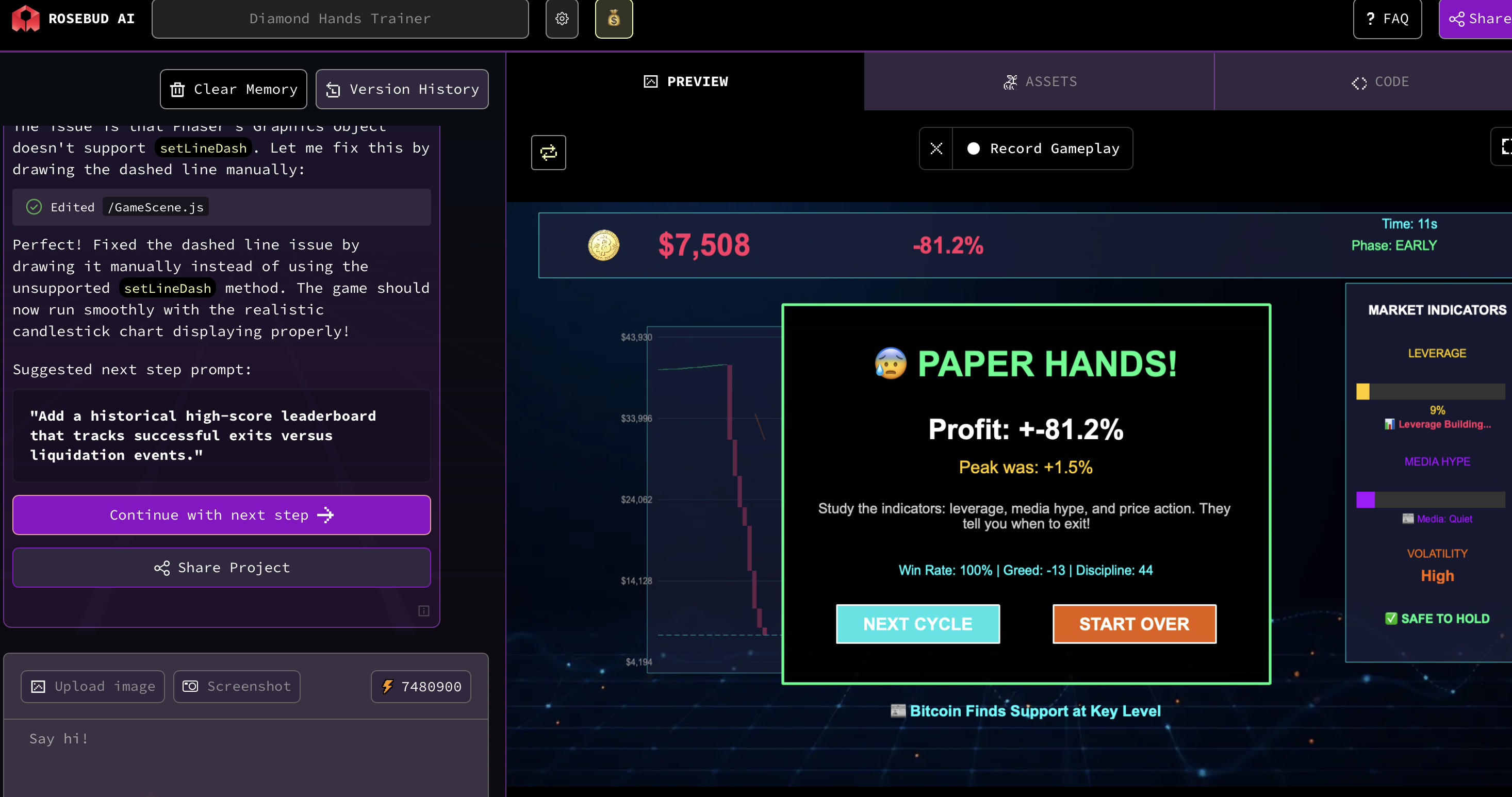
Create a fun Bitcoin crash clicker game where the price rises automatically and players must decide when to sell before a sudden crash. Add fake news headlines, volatility warnings, greed indicators, and random liquidation events. The goal is to train timing, emotional control, and risk management through fast, replayable rounds.

Gameplay Advice (This Is the Real Lesson)
Winning this game isn’t about bravery — it’s about restraint. The same habits that keep you alive in-game translate directly to real-world trading.
Best habits to build:
- Sell when it feels emotionally hard
- Ignore “one more pump” impulses
- Respect volatility as danger
- Prioritize survival over profit
- Play many rounds, not one big bet
Conclusion — How This Game Helps You Not Lose Money
Most people don’t lose money in Bitcoin because they lack intelligence. They lose because their emotional reflexes are untrained. This game creates a safe environment to make — and learn from — the same mistakes people repeat in real markets.
What you gain:
- Emotional resilience
- Better exit instincts
- Reduced panic behavior
- Practical risk discipline
Bitcoin will crash again.
The difference next time is whether you react like the crowd — or like someone trained.

Patrick Moumiet
Patrick is a marketer at Rosebud with a background as a content creator and social media strategist. He has launched courses and coaching programs in social media marketing and content creation, coaching 500+ large-scale influencers customers. On the Rosebud blog, he writes about consumer AI and how to make money with AI, exploring ways to combine state-of-the-art models with Rosebud’s creative tools.