


Why Avatar stays popular
At its core, Avatar is about a human entering a vibrant alien world and choosing where he truly belongs. That blend of identity, moral tension, and cultural conflict—set in a world that feels alive and explorable—is what makes the franchise endure. Its themes are universal, its spectacle serves the story, and even the title Fire and Ash suggests deeper consequences ahead. All of this makes Avatar perfect for a story-driven game: a living world, meaningful choices, emotional arcs, and cinematic moments shaped by the player, not by reflexes.
Why Avatar is perfect for a story game
A story game works when choices feel emotional, and when a world feels alive enough that the player wants to take responsibility inside it.
Avatar naturally provides:
- A clear moral tension (power vs protection)
- Strong identity questions (who are you becoming?)
- Culture and ritual (choices have meaning beyond “good/bad”)
- Stunning locations (perfect for video generation)
That’s why the best Avatar-inspired experience is often not a shooter—it’s an interactive cinematic story where the player’s values shape what happens next.
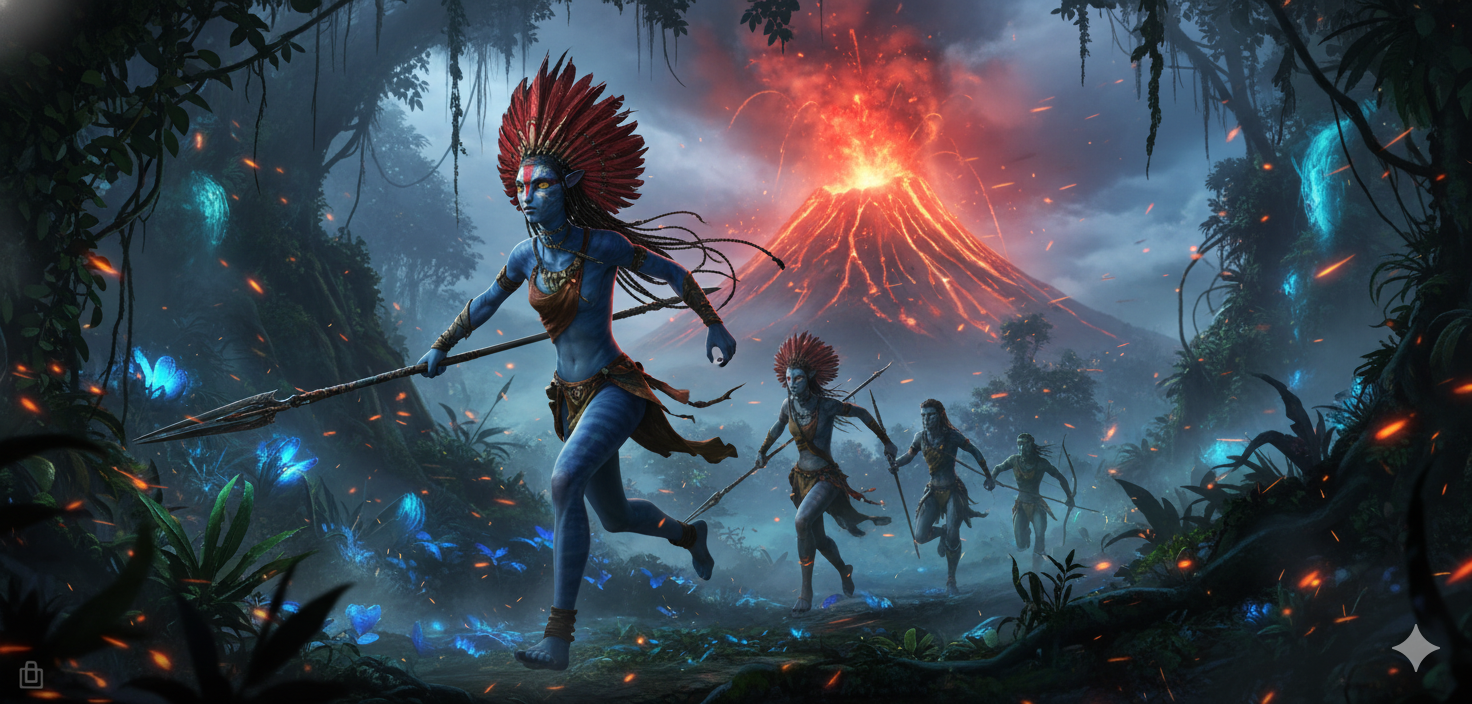
How to make an Avatar-inspired video-generative story game with Rosebud AI (no coding)
If you want to create a story game inspired by Avatar, the goal isn’t to reproduce the characters or plot—it’s to capture the feeling: a living world, a sense of wonder, and emotional choices that shape the story. With Rosebud AI’s generator (https://rosebud.ai/gen), you can build this kind of interactive experience even without coding. What matters most is defining the atmosphere and giving the player a sense that they are stepping into a cinematic world that reacts to them.
Build a simple story rhythm that always works
Even the best story games rely on a very simple loop. You don’t need complex systems to make the experience feel rich; you just need consistency.
A reliable story rhythm looks like:
- A short, clear scene
- A meaningful choice
- A visible reaction or consequence
- Then the next scene begins
Keeping scenes focused helps your game feel cinematic. Generally, the strongest moments involve:
- one location
- one emotional beat
- at most two characters
- a single action or turning point
This avoids clutter and lets the emotional tone shine.

Write for decisions, not encyclopedias
Lore is fun, but it’s usually the choices that keep players engaged. You don’t need long explanations about the world; instead, let players discover it through tension and tradeoffs.
Some of the most compelling choices involve:
- protection vs self-preservation
- honesty vs loyalty
- calm restraint vs decisive action
Characters also feel more alive when they have:
- a clear want
- a clear fear
This is enough to give them direction and conflict without overcomplicating the story.
Ending scenes with a question or an unresolved moment naturally invites the player forward. Curiosity is one of the strongest engines in storytelling.
Think like a director for video-generated scenes
When using video generation, clarity is your best friend. Short, visual descriptions create the strongest, most coherent results. Each scene should feel like a shot from a film—concise, atmospheric, and emotionally clear.
Helpful elements include:
- the setting and mood
- the camera feel (wide shot, close-up, reveal)
- one key action
- the character’s emotional state
The shorter and more focused your descriptions, the more cinematic the output will feel.
What gives the story an Avatar-like spirit (without copying)
You can evoke the world of Avatar without borrowing its exact details. What really defines the feeling is deeper than any one character or location.
Focus on:
- a vibrant ecosystem filled with beauty and danger
- cultures with rituals, values, and internal logic
- moral complexity instead of clear heroes and villains
- belonging and connection as emotional rewards
These are the elements that make an Avatar-inspired story feel lush, emotional, and immersive—while still remaining fully original. Paired with Rosebud AI’s no-code tools, they allow you to create a story game that feels like a playable movie: expressive, reactive, and easy to share.
Final Thoughts: Turning Avatar’s Magic Into Playable Stories
Avatar: Fire and Ash stands out because it invites audiences into a world shaped by emotion, culture, and choice—qualities that make it ideal for interactive storytelling. With AI tools like Rosebud AI, creators can turn that cinematic energy into playable stories where players shape their own path through a living, reactive world. Whether you lean into exploration, relationships, or moral decisions, the goal is simple: capture the wonder that makes Avatar unforgettable. And with no coding required, anyone can bring new worlds—and new stories—to life.

Patrick Moumiet
Patrick is a marketer at Rosebud with a background as a content creator and social media strategist. He has launched courses and coaching programs in social media marketing and content creation, coaching 500+ large-scale influencers customers. On the Rosebud blog, he writes about consumer AI and how to make money with AI, exploring ways to combine state-of-the-art models with Rosebud’s creative tools.