


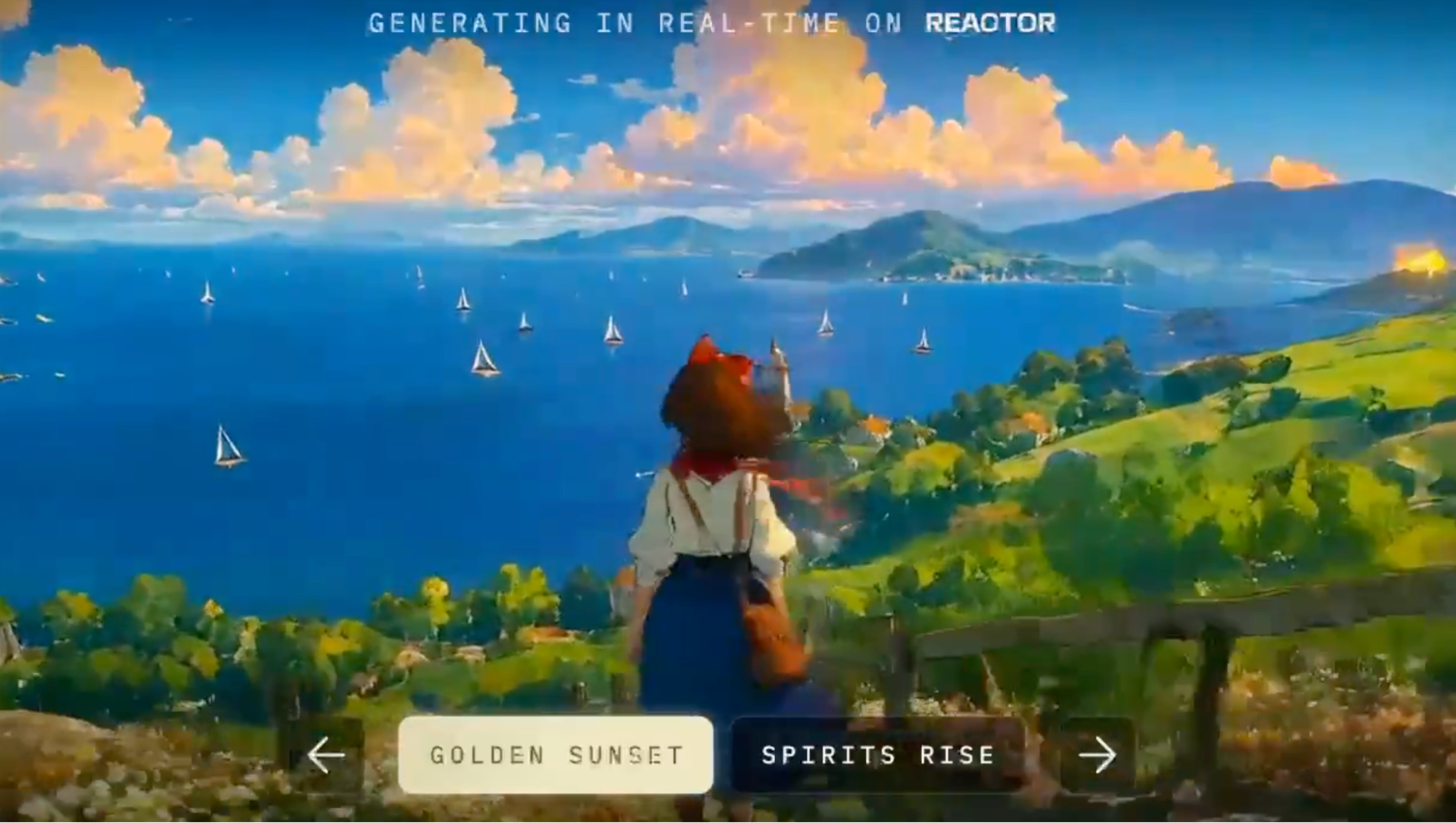
This article was written by guest authors Sachin and Sai Raina from Interact studio.
Games Are Starting to Generate Their Worlds
For most of gaming history, developers have built the world before the player ever sees it. Artists create the environments, designers build the levels, and engineers make them interactive. Generative AI has made creating code and assets easier, but the basic process remains the same.
Video world models are starting to change that.
Instead of building every environment ahead of time, they can generate the world as players move through it, creating and changing it in real time.
We’ve been exploring this by bringing Reactor’s real-time video world models into Rosebud.
From Prompt to Playable World
Rosebud lets you create games by describing what you want to build. It automatically generates the core components of a game:
- Code
- Assets
- Mechanics
- User Interface
You can continue to refine and iterate on these elements using natural language.
Video world models add another layer. Reactor provides the infrastructure to run them in real time. We used LingBot World 2, which turns a reference image and prompt into a navigable environment that responds to movement and camera controls, generating up to 16 frames per second with sub-second latency.
To try this out, we built Subject 731, a small choose-your-own-adventure game set inside a mysterious research facility. Try it here: rosebud.ai/play/rosebud-x-reactor-template-example-1-1
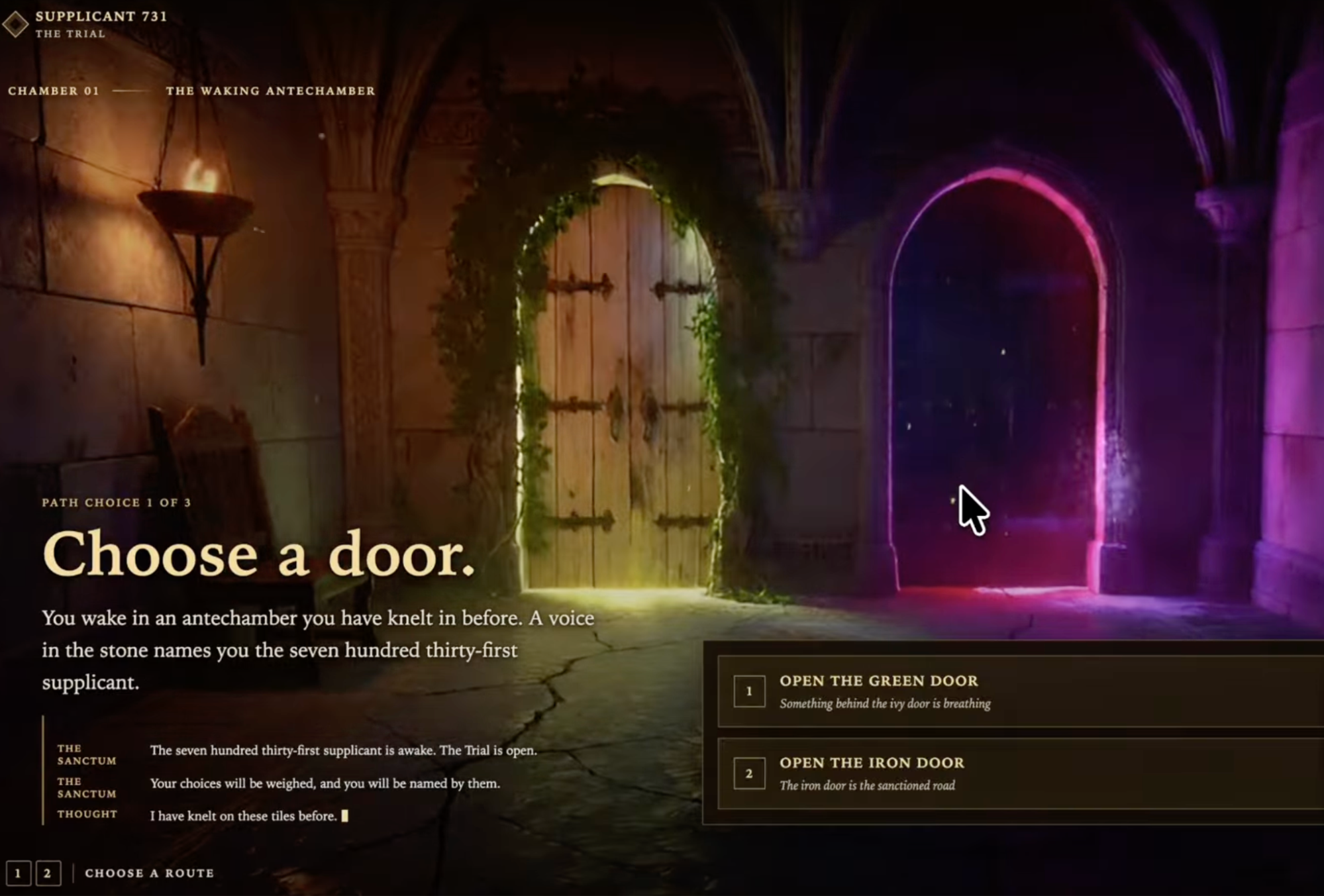
Each room has a reference image that defines its visual direction. When the player enters the room, the video world model uses that image to generate the environment in real time. As the player moves around, the model continues generating what they see.
Some more examples of games made in a world model hackathon, Inception II, we hosted on 22nd Aug, around interactive media and gaming with world models, powered by Reactor:
There is no pre-rendered video for the player to watch. The room is being generated while they are inside it.
Gameplay Still Happens on Top
Generated worlds don’t replace the game; they enhance it. In Subject 731, we layered a hacking mini-game over the generated environment. This approach allows structured mechanics like puzzles, dialogue, and progression systems to run through Rosebud while the visual atmosphere is generated in real time by the video world model.
Change the World With a Prompt
Because each room starts from a reference image, changing that image can change the world itself.
Reactor provides a variety of specialized models for different experiences:
- LingBot and Happy Oyster: for interactive world generation.
- Helios and LongLive 2: for continuous and multi-shot video generation.
Together, these models make it possible to experiment with different parts of a game experience while Rosebud handles the gameplay and brings everything together.
What This Means for Game Creation
Video world models are still early, but they are already moving beyond the idea of generating a nice-looking video and toward something much more interactive.
This technology represents a paradigm shift: game worlds are no longer static assets finished before launch, but dynamic environments that evolve through prompts and player movement. Creators can now treat the world as a fluid part of the gameplay experience itself.
We are excited to see what happens when creators start building with that idea.
Games where the world is not just something you play in, but something that is generated while you play.
